Episode Transcript
[00:00:00] Speaker A: This was made by humans.
[00:00:05] Speaker B: Welcome to Austin Community Conversations, a podcast
[00:00:09] Speaker C: featuring discussions about the interests, backgrounds and projects animating the members of a vibrant college community.
The views, thoughts and opinions expressed are
[00:00:19] Speaker B: the speaker's own and do not represent the views, thoughts and opinions of Austin Community College. The material and information presented here is
[00:00:28] Speaker C: for general information purposes only.
The Austin Community College Community college name and all forms and abbreviations are the
[00:00:35] Speaker B: property of its owner and its use
[00:00:37] Speaker C: does not imply endorsement of or opposition to any specific organization, product or service.
[00:01:10] Speaker A: If you were to run a few web searches for information on how Americans view the purpose of public education, you'd naturally find answers varying from survey to survey. Some polls, for example, suggest that people think public education should contribute to students sense of personal well being. While this answer is entirely absent from other surveys, there are a few answers, however, that show up on just about every poll. You'll find the first of these is preparation for the workforce, and I imagine that many listeners will be unsurprised to hear this.
You might be surprised, however, to discover another answer that's every bit as common. People uniformly cite preparation for a civic life as a central function of public education institutions, in some cases prioritizing this even higher than workforce considerations. It seems that most people believe that public education, which includes higher education institutions like Austin Community College, should emphasize the skills, knowledge and dispositions that support engagement with civic life.
Like all community colleges in Texas, ACC brings this about partly through curriculum where, for example, all students completing state core requirements have to take multiple semester credit hours of history in government.
ACC students, however, are privileged to have access to the center for Government and Civic Service, which describes itself as a creator, catalyst and nexus for civic action.
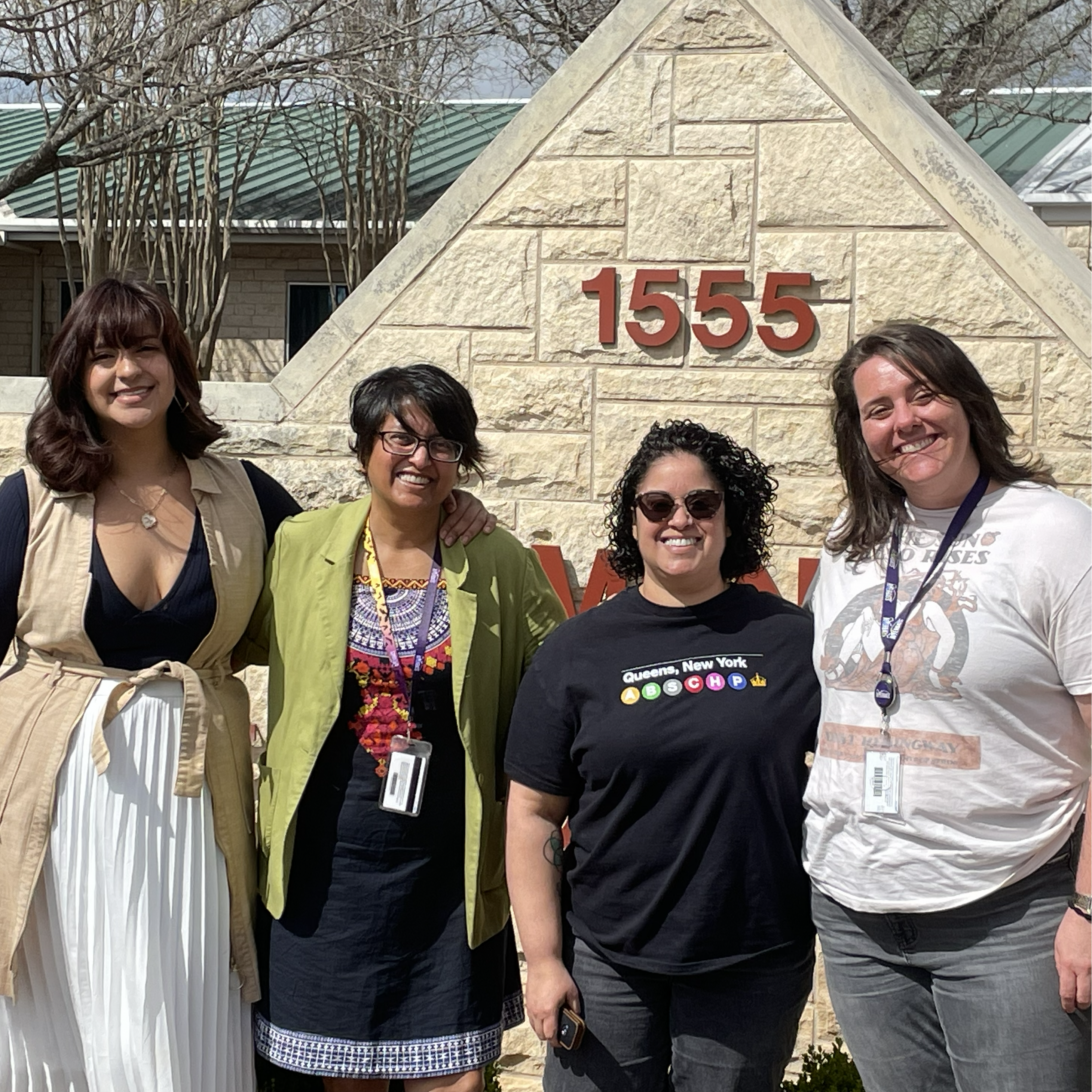
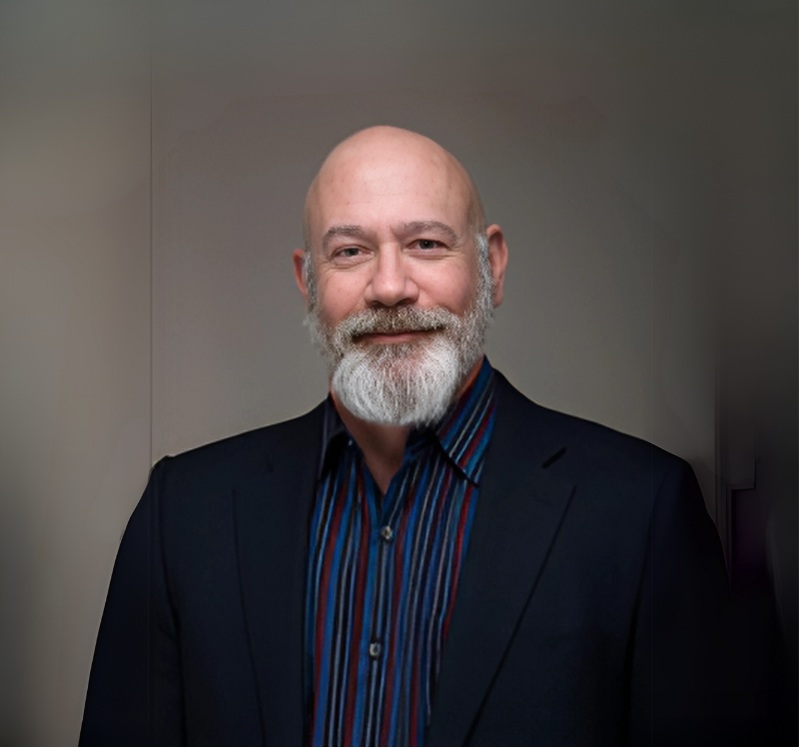
My guests today are Brian Port, who serves as the center's director, and Vanessa Trujano, a member of the team of student employees who develop and facilitate a range of rich programming opportunities. Brian and his team bring civic engagement to life in new and innovative ways, and I invite you to learn about what they offer both to ACC students and the broader Austin community. Let's dive in.
Today I'm joined by Brian Port and Vanessa Trujano. Welcome to the conversation.
[00:03:00] Speaker C: Hi. It's great to be here.
[00:03:02] Speaker B: Hello. Thank you.
[00:03:04] Speaker A: So, Brian, I'd like to begin by asking you a little bit about the route that you took to your current position as the director for the cgcs, the center for Government and Civic Services, in particular, if you wouldn't mind sharing a little bit about your your academic background and professional background prior to this role.
[00:03:26] Speaker C: All right, maybe not Quite the norm when it comes to working in a college. I haven't been an academic for very long, if I can even yet consider myself to be one. So I spent 30 years in the federal government in a mix of military uniform service and then federal civil service, had the opportunity to retire early and knew that I really wanted to come and work, particularly at a community college.
So I've got a few master's degrees, one from Georgetown University and a second from the National War College. And I'm working on my PhD. So I'm ABD at this point at UT in history and teaching history here at the college and also had this amazing opportunity to found and run the center for Government Civic Service.
[00:04:08] Speaker A: Outstanding. Well, congrats on the ABD status. A lot of writing ahead of you, I suppose.
[00:04:13] Speaker C: Working on it every day.
[00:04:14] Speaker A: It's a long road. I know it well. So maybe to talk briefly about your faculty role prior to talking about the Center.
You teach history courses here at acc.
What's it like for a student who's thinking about taking a class with Professor Port?
[00:04:32] Speaker C: It's a little bit of a moving target because I'm still relatively new at teaching. I've been doing it formally for three years. I suppose I have been doing it in some form or fashion all my life, but in a very different context.
I'm experimenting. I'm learning new methodologies. I'm part of an initiative that's ongoing right now at the school and character education that we're going to be trying to bring forward.
I'll teach my first honors course this summer. And so it's been a mixed bag, but it's been evolving much more into a kind of participatory model of not trying to learn everything in a sense, not trying to cover everything, but rather focusing on some number of things and allowing the students to really think more deeply about certain pieces and then discuss it together in small groups and then together in a large group. And that's the model we've been moving towards. And I abhor multiple choice tests.
We do much more sort of writing and other kinds of production, types of assignments. Things that also translate into practical, real world applications.
[00:05:28] Speaker A: Sure. Okay. And I guess that sounds like it overlaps pretty well with the work that you're doing in the center in terms of looking for real world applications.
[00:05:37] Speaker C: Sure. I mean, in some ways, playing to my strengths. That's something I do know and understand. And so I can for as long as it remains the same. I know that AI is upturning a lot of things and there's a lot of questions about how that works out, But I still think there's a lot of just fundamentally human things that still matter, and for quite a long time, it will hopefully always will.
[00:05:58] Speaker A: Yeah, well, I'm biased in that regard as a dean of humanities. I like to think that's true. But time will tell, as you say. Well, so then the center itself. So this is a relatively new center at acc.
If somebody is hearing about this for the very first time, what's the mission?
[00:06:15] Speaker C: Mm.
So it has a bit of a strange origin story, and I'm not gonna go too far into that, because I mentioned it, because it provided this opportunity to do something different and that myself and my boss and some others felt there was a need to do, which is focus on civics and in particular, on leadership. And so the core mission is to provide a platform that's gonna create opportunities for our students, but also the broader community to learn specific leadership skills and attributes in an experiential, practical sort of format that complements what we're teaching in the classroom.
Our mission is to build leaders.
Then there's another important part of it. One of the reasons that we welcome Vanessa here is that the philosophy of the center is to do so by, with, and through our students.
We have six, soon to be seven students that work at the center that we actually train, teach, educate, mentor, to literally conceptualize, design, and then execute and lead the different initiatives that we run. So they're the ones actually increasingly that do the work from inception forward.
And that's been another exciting thing to do. And the final thing that I'll say is everything we design there is meant to do at least two or three things. Provide the participant, because we also open most of what we do to the community at large, provide them skills, a chance to build professional and meaningful relationships, and to build those skills and relationships while also serving the community in some form.
[00:07:38] Speaker A: Okay, that sounds really fantastic, and I look forward to talking here about some of those specific programs that you have put together.
But, Vanessa, your role, which I gather is fairly recent as one of the student employees at the center, sounds like a really wonderful part of what makes the whole system tick. How did you come to the center?
[00:08:01] Speaker B: Thank you. I am fairly new. I think I just started yesterday, but I am fairly excited. Actually. My first ever interaction with the big event.
I'm so sorry.
My first ever interaction with the big event at ACC at the Austin Community College was event that they had put together. I was just recently hired at the ocrm, the communications department, and I knew nothing. I was a fairly new student. I was super nervy, and I was sent to cover a simulation. Actually, at the time, I couldn't even remember the acronym for the center. And it was super nervy. And I saw Brad acc, who I was like, oh, my God, what am I going to do here? And they handed me a portfolio with, like, how to join the simulation. And I did. I was supposed to cover in a journalistic way for it. And it was super fun and it was excited. And since then, I met. I met a lot of my friends that actually worked there. Some of them still do. Some of them I moved along for wonderful different opportunities, but I just kind of got excited. I was like, this seems like a great opportunity. Everything that goes along here resonates with me, with my career path and with my experience so far at acc, which being so. Which has been so changing.
So I've just kind of stuck around, kind of like assisted some of my friends with some of the things I had going on. And just got to meet Brian actually as a student and as a volunteer. Before I could do it as a potential worker and just a random day, the opportunity came along and I just took it. And I'm excited to be a part of it and to make, hopefully, the CGCs more enticing and accessible than it already is.
[00:09:34] Speaker A: Outstanding. Well, for what it's worth, I still get the acronym wrong from time to time. I'll find myself typing ccgs. I'm like, wait, that's not it.
The simulation that you mentioned, I know that this is one of the more successful programs that you guys have put forth so far.
What is a civic leadership simulation?
[00:09:57] Speaker C: So we've sat down and thought about what are core skill sets that are crucial to being an effective leader? And we take a skill set. The very first one we did was on strategic communication and broke it down into some component parts. We're obviously looking at the very entry level. Nobody needs to come to one of these things with any experience or training whatsoever.
They're welcome to, obviously, but in this particular case, we decided that we'd focus on three core areas. How to read a room. How to establish a presence, both sort of physically, but also psychologically, and then how to target and deliver effectively a message.
There's another piece of that that sort of goes throughout everything that we do, and that is getting our participants to focus on the issue of planning and preparation and actually going in with an intentional objective, which sounds very basic in a sense, but many of us forget to do that, you know, we're going to go and engage in some way and just in many different aspects of our lives.
And so then with those skill sets in mind, components of strategic communication, we knew we needed a vehicle, you know, to give the opportunity to, to practice those skill sets. We have started to offer workshops in advance of the simulations. A two hour long workshop that teaches the specific techniques that will encourage people to use during the simulation. But we then, with the objectives and mind learning objectives, thought what techniques would go along with them, chose a finite number so that we could make it digestible. And then we have structured a scenario around what we are teaching. So in this particular case, we create a fictional. We have all kinds of artifacts. We created newspaper stories and leaked emails and other sorts of things that go along with this. But we create a fictitious company that bioengineers a plant that mutates and then starts causing a disease.
The disease is only about five days old. And so the scenario held that the mayor calls the city public meeting. And then we design roles. Some students play a government role, some will play a member of the public, which is a fairly broad spectrum of people. There's a role that's a teacher, a concerned parent, a conspiracy theorist, anti police activist, cop's wife, cop's spouse. So there's all kinds of roles. Every role has a very specific simulation objective.
We have a, in brief, where we explain the mechanics of the simulation.
We then have an hour for the participants to plan and prepare.
The government folks need to come up with a game plan. Their objectives include things like prevent panic, illicit cooperation. And then there's within their very specific objectives for each of the government officials, the members of the public are trying to get commitments on certain decisions, but they're also trying to feel out the room who's who, who agrees with me, who doesn't. And then after that second hour, we do the actual public meeting, which is the heart of the simulation. And we have people going at it just like they would in a public meeting. We encourage people to ham it up. They've got the benefit of this role, so they have kind of a shield, a Persona they can adopt, which makes it more comfortable for people to kind of step up and outside their comfort zone. And then after everything's said and done, we sit down with everybody and we can unpack what, you know, what happened. We've given people a framework and a lexicon, so that way they can kind of begin to take what they learned with them and then layer on top of it through successive experiences later. But in the discussion, because we had very specific objectives. We can turn, for example, to the chief of police and say, all right, what was your objective? And their objective, in part was to encourage people to not join protests. We had somebody in the audience, anti police activist, who was encouraging people to join the protest. And now we can ask everybody else who's going, yeah, right. What changed your mind? You know, what convinced you, what went well, what didn't? What, you know, and give that set of people a real sense of, I tried this and it, you know, didn't work. So we have techniques. We teach them how to use questions instead of points, you know, statements to make a point. We talk about framing and anchoring arguments, the use of emotion. And so we encourage each person to take one of those things, don't try them all, and very deliberately try to apply it and learn how it works. And then that way, in that reflective conversation, we're able to draw that in and bring it into focus for different participants so they can connect with it in a way that they can take with them.
[00:14:10] Speaker A: So this sounds first and foremost, a lot of fun, at least potentially. I imagine it also has a potential to get a bit intense once you get into the heart of the simulation itself.
Vanessa, when you attended this, am I right in assuming that. That you might not have known a whole lot about what you were going to be witnessing in advance?
So what was that experience? Like? What. What did you see when you attended the simulation?
[00:14:34] Speaker B: A lot of people. Okay, to begin with. And I assumed in my head everyone knew how to do it. So I was like, oh, my God, this is looking kind of crazy right now. And a bunch of folders and information. But it looked fun. It kind of reminded me of roleplay in a way.
Yeah. And I just remember a bunch of people running around, and then everyone was kind of hesitant at the beginning, but then they got really into it, and the groups, just, like, you could see their faces, flustered, happy, worried, like, whoa.
[00:15:03] Speaker A: Yeah.
[00:15:04] Speaker B: Oh, you know, it was really fun to cover that event. And I remember it dearly, too.
[00:15:09] Speaker A: Okay. I wonder, you mentioned that you felt as though everybody else knew how to do it, but you didn't. But I suspect that might not have been true, that a lot of the attendees also felt similarly, that they weren't quite sure how to get started. Started.
That's kind of maybe nice just to emphasize, because one of the great things about these events, as I understand it, is, as you said, Bryant, it doesn't presuppose any expertise or experience. The idea is that you can just show up open to an interesting experience, and you will have one.
[00:15:40] Speaker C: I think that's true. I mean, we. We inject a lot of humor into the roles.
[00:15:43] Speaker A: Okay.
[00:15:43] Speaker C: And encourage people, you know, if your role doesn't have certain specific details, as long as it's feasible, you can add into it, and we'll let it fly. So, for example, if your role doesn't specify whether or not you have kids and you decide, I want to have kids. All right, you can have children. If you want a certain kind of job and it's not specified, that's fine as well.
We have, in, you know, some of the simulations offered awards at the end, like a little mini Oscar, you know, for best performance kind of a thing. And we've had some people really rise to the occasion, you know, and have a great time, which just. It adds to the experience. And people can also laugh while they're learning.
[00:16:19] Speaker A: Yeah.
I'm reminded maybe if you're familiar with, like, the model United nations programs that you see around the country. It sounds like that, but maybe a little more fun.
[00:16:29] Speaker C: Yeah. I mean, this is. It's raw in a sense, you know, because we. If you're with a model U.N. you know, kind of chapter at a school, you're. You're kind of in that environment. It's an extracurricular. You know, you have regular meetings you can build up over time. These are designed to.
They would be better if we. If we could, you know, have a kind of a Runway. But they're designed so if we don't have that, we can take a person and in four hours, give them a few tools that they can take with them. We, you know, very clearly caveat, like, nobody's walking out of this. As an expert.
[00:17:00] Speaker A: Yeah.
[00:17:01] Speaker C: Even if you walked in as one, I don't know if you walk out the same way. Right. I mean, hopefully we're getting a bit of humility as well and just, like, how much we don't know. And I don't care how old you are, how long you've been doing this, how much formal training you had. There's always more to learn.
[00:17:13] Speaker A: Yeah.
[00:17:13] Speaker C: And that's the great thing about, you know, being in my position is I get a chance to watch and learn from other people who are experiencing these things for the first time.
[00:17:21] Speaker A: Sure.
[00:17:21] Speaker C: And that's. It's fun, but it's also very enlightening.
[00:17:24] Speaker A: Yeah. I'm thinking about this in terms of the. The objectives that you described about cultivating leadership skills.
It's easy to. To talk about leadership skills and to.
To kind of pander to them in a sort of intellectual way. But what you're describing sounds a lot more visceral. So, for example, you'll often find in textbooks about leadership or seminars about leadership that it's important to be confident and capable of engaging in constructive disagreement. Right. Easier said than done.
But what sounds really cool about the simulation you described is that it is my job, in virtue of the role that I have to be kind of the stick in the mud in this simulation. And so that would maybe take some of the personal pressure off of me, like it's okay for me to inhabit this role and engage in the disagreement in a more wholehearted way.
Do you find that after the initial setup of the thing that folks really do start to lean into those aspects of the characters that they play?
[00:18:35] Speaker C: Sure. I mean, beyond a shadow of a doubt. And this is one of the things that we, as moderators, sometimes we'll step in to stir the pot to either show folks it's okay or to get things going a little bit, where folks at first might be hesitant to sort of provoke somebody that we have a sense is open to it and we get a bit of a sense. We'll sometimes ask folks, like, if you want a more active role, let us know.
And, you know, we'll, you know, provide you one of the more active roles.
[00:19:03] Speaker A: Yeah.
[00:19:04] Speaker C: And then we know that that's the person too, that we can use to light the spark. And then usually once you get it going it. So far, we've not had any that really have stalled out in any meaningful way.
[00:19:14] Speaker A: Okay.
[00:19:15] Speaker C: They get going pretty well. We. We normally don't have enough time.
People would rather run them longer, I think in most cases than we have time to. To do them.
[00:19:23] Speaker A: That's probably a good sign.
[00:19:25] Speaker C: It is.
[00:19:25] Speaker A: You find that people don't want to. Don't want to stop. That's a good thing. Am I correct that that there are so far been where faculty partners or classes have partnered up with the simulations?
[00:19:37] Speaker C: We have several of them. So we've worked with some philosophy and some communications professors. So far, I think we're getting set probably to start working with at least one history professor.
So that's emerging. We're also doing these things in conjunction with one of our early college high schools. We've done several with them. We have another. I don't know if I should name the exact school, but we have a school coming next Monday, high school, and we're going to run a simulation for them.
It's building Momentum. But the idea in part is that any faculty member or student for that matter, or staff member who wants to do one, we have several that are built and they can request that we run one and we will. Or we invite faculty members to say, I've got a particular thing that I want to get after with my class.
And if we've got the capacity, we're more than happy to lean in with them, design it and help them to run it as a sort of a service provider. Knowing that many of our faculty are encumbered with a lot of teaching responsibilities and perhaps don't have the time and energy to take a step back. And really, it takes us a good couple hundred hours to build one of these. In a sense, when you look at all the research that goes into it and all the architecting.
I have, for the first time right now, one of the other students that works at this center, who has been leading a lot of these things and also has started to. She's gotten to a point where she actually delivers the workshop, the skill building workshop. I have a second student that's leaning in and helping to architect the third simulation that we're working on right now, which is looking at the different types of roles and the conflict dynamics that go into it, so that we have people who can have what feels like a real conversation because they have enough data on both sides and there's enough of a disparity that we understand and what data they have so that we know they have a chance to meaningfully engage.
Takes a lot, you know, a lot of work and thinking to sort of make sure that's gonna.
That's gonna sink.
[00:21:28] Speaker A: Yeah. What a tremendous resource, though, to have to have the student employees who are able to be kind of the genesis of all this. Of all this stuff. Yeah. I imagine that in the sense that the events themselves get to nurture or plant the seeds of some leadership skills for the attendees that.
That the student employees are going to get maybe even stronger dose of that as they do the work.
[00:21:54] Speaker C: I think that's absolutely true. And they have more time to dedicate to it. We're able to, for the time being. We've got the budget to pay. We're raising more money as we go to perpetuate that. But I usually don't let the students that will be working at the center. I want them to think of themselves as young professionals and staff members, not as students.
And so I usually insist that that's how they identify themselves when they're dealing with other people outside of the College because I want them taken seriously. They're invested with all the authority that I'm able to give them. I tell them they're able to make decisions on behalf of the center in my name and that it's okay to make mistakes as long as they're well meaning intentioned mistakes. And we'll fix it and we'll learn more from it.
[00:22:31] Speaker A: Yeah. Well, having come up to the space on a few occasions and been met by the students and staff who work there, I can attest to that fact. There's no mistaking that you're in a professional interaction when you work with the students there. It's great.
I know that there's been a few other larger events that have happened over the past two years. One of these was the River Hacks event.
So this is a completely separate thing from the simulations. Yes. Right, yeah. So, so what's the River Hacks event?
[00:23:01] Speaker C: So we have three main initiative areas, civic leadership, public service, and the third is citizenship and technology.
So in this case, and this has happened in a few instances, we've been approached by different student organizations who've been struggling to get something off of the ground.
And so we, in this case, the Chancellor really asked for us and a few other staff elements to lean in a couple of years ago to get a hackathon moving for the student group. And so we've, we've kind of stayed plugged in there, working with the student group over a couple of different iterations of membership to at least once a year, preferably twice a year, help them on the design logistics side to hold the hackathon. So it's an all weekend long event. We've also tailored it to our own mission set. And so we've created a public service theme now to each hackathon. So we did one last spring with the city of Austin, we did one last fall with it's a NASA affiliated program called Space Apps. We were going to try and do one this spring, but we couldn't quite pull it off.
But we're definitely on tap next fall to do another one again with the NASA. Space Apps will be the theme where NASA provides data and problem sets for the students to work on. And then it's part of, it's a global actually event. So there's multiple different places where it's happening. And some of our student teams won, you know, for the competition here and then had their projects put forward.
We're also able, this past time we had, you know, a number of great sponsors and so we were able to hand out about $14,000 in prize monies to the students outstanding. So it's, you know, it's a great event. It helps to further build the community in addition to the skills of the students. A lot of fun, a lot of work. You know, we've had some great students here who've made this possible and, you know, they just needed a bit of help and momentum to carry it off. So there's a number of things like that that we have going on that are beyond the simulations that are very practical. If we have time, I'd be happy to talk about a few more things that people can really kind of sink their teeth into that. We're also trying to build badges and even eventually micro credentials around to create a package of sorts for the participants. Because again, it's not just students.
We encourage this to be a pretty holistic, community based set of programs.
[00:25:17] Speaker A: Do you find. Vanessa, I know that you're new to the role, but are you finding yourself attracted to any particular kind of initiative work at the center?
[00:25:28] Speaker B: Tough question. I guess as of right now, I'm trying to, you know, get myself familiarized with everything that's going on and seeing how I can help as much as possible to further the impact that all my co workers and Brian are working on. But I guess I do have some stuff in mind. Before I came in, Brian was kind enough to ask me what were my personal interests, what was my career, what I wanted to do at the end of, you know, my academic life. And I did tell him, hey, I would love to become an attorney, immigration attorney at some point. That's kind of what I do on the side. I do work with some non profits. And he said, you will learn the specific stuff that, you know, we need right now and the things that the team will help will be helped with. But also you will become a specific type of professional that, you know, will acquire a set of skills that will be helpful in anything that you do. And then if you have any specific initiatives that have to do with, with anything that you're also forming yourself with, you can bring them forward. I haven't thought of anything yet, but I will say this space feels completely open to do so. And I'm inspired by that.
[00:26:31] Speaker A: I'm excited to see what comes out of that.
There's a sense in which I think the mission of the center and the work that you've described so far speaks to something that I think is particularly interesting here, and that is that while it's certainly true that the skills that students are going to cultivate have obvious applications in their professional lives.
They're more than that. Right. So it sounds as though the, the center is playing a big role in, in positioning acc, you know, an institution of higher learning as a place where people are prepared not just for professional lives, but for lack of a better word, for citizenship in that traditional sense, to actually engage with the communities in which they're embedded.
And I wonder where you see that work kind of bubbling up from student interest in terms of some of the other programming you're doing.
[00:27:35] Speaker C: Most of what, pretty much everything that we've done has been inspired by accommodation of things. An essential piece of that combination is a discussion I've had with a student or with multiple students.
And so that's, you know, where I, having had many of those discussions, that's where I latch onto something. And now that we have student employees, it's a bit more organic. So I look at each of the team members and I say, you are welcome to embrace something that you care about, whether it's what you're going to study, whether it's something that you just care about as a person, whatever that is, and we'll build something around it. And so we have, we call it the Central Texas Issue series. We have one student who's already launched a project on climate and sustainability.
He gathered well over 100 folks a summer ago for a day long summit. Include a number of local political leaders and community activists and students and other people.
Next up, Marisela Austin was the one who did the climate summit. Marisela did one on student journalism and had student journalists from about six to eight, I think of the schools across Central Texas gather for a day to think about how do we come together as a community and support each other.
These are meant to be ongoing concerns that identify some specific objectives and work toward them over a period of time. On March 27th we have the third in a series.
Two of the students, one is volunteering with the center, one who's employed there. They're going to do one on law. This is going to be a day long consideration of this intersection of artificial intelligence and the future of the practice of law.
We're sort of taglining is, you know, should chatgpt be your lawyer?
[00:29:08] Speaker A: Yeah.
[00:29:09] Speaker C: And the idea in part as we structured this is to run a bit of an experiment so that people get hands on. And what we're going to do is look at different demographic profiles that are all trying to use the AI instrument to answer a specific concern they have with the rental agreement. And we're Going to see, you know, does each group sort of come away with a similar answer, or are they different? And can we account for what caused the differences? Was it the way they interacted with the system? Was it the profile that they went forward with and get a sense. Because we're going to invite some law professors and JD students as well, so that we can also talk about what was the legal quality of the output, for that matter, and begin to consider this and see if we can't scale that up then and deal with a more complicated issue of law, like later this year, and do sort of a similar thing. So you've got like, this is the everyday person's issue. And then maybe look at something that's, you know, a bit more like Supreme Court. Ish.
[00:30:04] Speaker A: Yeah.
[00:30:05] Speaker C: You know, and just get a sense of what that looks like, but also let the participants really play around with these things in a structured way.
[00:30:11] Speaker A: Yeah.
[00:30:12] Speaker C: After having had. We'll do a keynote speaker in the panel that'll help us to get into the headspace to include a basic orientation as to the current kind of characteristics and limitations at a. Again, a very basic level concerning AI.
[00:30:26] Speaker A: It's telling that you have described the work in terms of students having a chance to play around with what they're learning and also a spirit of experimentation.
I think in a cultural environment or political moment or historical moment where the stakes might feel very high. Having the chance to actually dig in and really feel what it's like to work with these skill sets probably is one of the more valuable things that we can offer to our students.
[00:30:55] Speaker C: I think it can be. I mean, there's something that I would say is a bit intangible about what we're currently doing.
It finds some way to begin to articulate it with our own school's theory of change and the North Star goal. It's a hard thing to prove in a causality way, especially in a relatively short time frame. But a lot of folks have, you know, when we see the feedback who've come through, the things that we're doing are expressing a greater degree of confidence and agency and also a greater degree of sense of connection.
And so I, you know, I look at that as a pretty positive indication, you know, of. Of where we're going, what we're providing, which I think in the moment that you're describing is, you know, one of the better things that we can do, because we can.
Well, one of the ways that we put it is I almost don't care what the issue is.
We care about giving Any of our students a skill set that will help them to better deal with the issue, no matter what side of it they might be on.
The only sort of hard break for us is we categorically object to anything that calls for violence. Otherwise, you can have whatever issue and perspective you want and you have a place, as far as we're concerned, with us.
With obviously some caveats. We want people to be thoughtful, considerate, constructive. You know, the things that we would expect in an academic institution generally is what we want people to come with the right kind of spirit and approach.
But, you know, your opinion is your own. We just hope that we'll give you the opportunity to first further refine it, strengthen it, and then be more effective in expressing and advocating for it.
[00:32:26] Speaker A: Yeah, you're right.
There is going to be a sense in which you wouldn't be able to run, let's say, a controlled experiment to demonstrate the causal efficacy, if you will, of a civic leadership simulation leading through to completion or transfer. But we do know that students sense of belonging and purpose and connections to their disciplines and being able to see application of what they're learning in their courses to their actual lived interests, that those do correspond to those sorts of goals. So it. You might not be able to prove it right away, but it seems intuitively obvious that those connections would be there.
I wonder if you see immediate connections between your academic interests as a historian and the work that you're doing in trying to bring students to active engagement with the things that interest him now in this particular historical moment.
[00:33:37] Speaker C: That's a, you know, a very interesting question, first of all.
So intuitively, I absolutely believe that that is true.
I couldn't say, though, that at this point I've gone about it in a deliberate way of making that connection.
So, you know, I'm struggling to answer the question in a really succinct way. So I'll just. I guess I'll say this when it comes right down to it, you know, being an historian is as much about the basic sort of. And I think this is true for many different academic fields, is about a certain sort of core set of character traits, in a sense, intellectual curiosity and humility and honesty. And I think those things are fundamental to what I'll just call like a proper exploration and use of history.
And so I think, you know, through imparting those kinds of skills, it does have a connection, you know, that encourages people, whether it's history or sociology or math or physics, that we would, you know, approach those things with a certain spirit and With a certain kind of.
I'll use the word professionalism. It's not exactly on point, but to, you know, appreciate those things as a discipline that do take practice and an investment that's worthwhile. And I think, you know, there. And as. As far as it is to be an historian, you know, it's the same thing, these other disciplines, that this is an important type of activity to do.
[00:35:01] Speaker A: Yeah.
[00:35:02] Speaker C: You know, will help you to find, you know, a way to give expression to the things that you're learning in the classroom, whatever class it happens to be.
[00:35:09] Speaker A: Yeah.
Well, there's no shame in not being able to answer a question like that succinctly. You know, full disclosure, it was kind of an invitation to meander a little bit and, and, and get in for the audience to get to know you.
[00:35:22] Speaker C: We are, I will say this because, you know, whether it's the event that I'm going to hold in my honors class, we're going to do it, what's called a tabletop exercise there. We have a historical group, the Daughters of the American Revolution. We're doing an event with them. They're going to have an exhibit in our space for a couple of weeks, and we're going to, you know, do a few panel discussions around it, maybe a speaker event, you know, a community event.
So, you know, we are trying to bring in a way to.
To do real history, in a sense, work, if you will, of exposing people to certain subject matter issues.
But again, to me, it's, you know, the. The intent of the space is to be kind of disciplined and topically agnostic. You know, it's. It's meant to look at the.
The practical aspects of where that discipline is and find ways to help our faculty and staff, but certainly our students, to make connections between theory and classroom learning, you know, in the real world, and especially as it takes whatever they happen to be doing and translating that more into citizenship.
So, you know, you can be a physicist. That's great. We also need everyone, though, to be a good, solid citizen, and that's equally, in some cases, I would say, more important.
But it's not neither or proposition. It needs to be both.
[00:36:33] Speaker A: Yeah, that's right.
If I recall correctly, you've. You've done quite a bit of work in developing partnerships with community organizations in the greater Austin area.
Maybe if you might speak maybe a little bit to how maybe one or two examples of those inform the work of the center.
[00:36:52] Speaker C: I mean, most of everything we do, we try to partner either with a nonprofit or usually a local government Agency. So we have some things going on with the city, but I'll draw on one that's particularly meaningful to me.
But I think, you know, to. Well, I know to quite a few people there's a nonprofit that we work with at goes by what I think will catch a lot of people's attention, the name Skull Games. But it's a non profit dedicated to fighting human trafficking.
And so we co sponsored or ran a task force with them last year. This is their kind of basic model as they teach the folks that they're involved with how to do what's called open source intelligence collection, analysis. And then they, they basically bring volunteers together to do the research, to provide the law enforcement that then conducts operations, liberate victims and prosecute traffickers. And so two of our students went through the training and participated in the last task force meeting. We're doing another one with them this coming October is when it's planned and we're going to probably start advertising about it pretty soon and recruit a core of students and eventually we're hoping to maybe make this no service learning course.
Who want to go through that training and be a part of the task force?
The students who, the two students who were part of this one, the first one we did, are very invested. One of them wants to travel on her own dime to go to the next physical task force meeting.
You know, they were involved with liberating 26 victims and have 10 traffickers under prosecution based on the operations, as I understand the figures, I could be slightly wrong about those. But the bottom line is real people were, you know, given a chance at getting free. And then real people were doing horrible things.
At least there's a chance that they'll be held accountable based upon the work that this group of people did.
It's a fantastic group of some people who really care about the issues, obviously. And so there's a number of different groups like that that we've had the good fortune to start to partner with in a lot of different ways.
It is, I mean, it's not the norm in the sense that oftentimes you have to wait a long time to see the results, you know, of work that you do in these ways. They just have a certain model, you know, because of the law enforcement partnerships that they have, you know, and they're also part of their philosophy, which I also really like, is they don't work with agencies that target the, the victims of the trade, so to speak. So I mean, they're looking for other partners to provide services. So basically they don't want to see any actions taken against the women in particular, but others, men and children who are forced into these things, you know, they're after the perpetrators. And so that's another part of the model that I think we also really appreciate.
[00:39:27] Speaker A: Okay.
[00:39:28] Speaker C: They're a fantastic organization.
[00:39:29] Speaker A: Yeah, sounds like it.
[00:39:31] Speaker C: 1.
[00:39:32] Speaker A: One final event that I was interested in asking about was the Journalism Summit that was hosted at the center. So ACC has a journalism program, of course, but what journalism is and what it's going to be, you know, five, 10 years from now seems like kind of a very interesting point of focus for contemporary life. And I wonder what that event was like and who attended and what the outcome of it was, in your view.
[00:40:02] Speaker C: So the main thing I would say about that is I would encourage you to have another podcast episode with Maricela, who ran it.
[00:40:08] Speaker A: Okay.
[00:40:08] Speaker C: And, you know, maybe a few of the other students I'm sure could cobble together from a lot of different places to include here at acc, you know, who are a part of it.
So, you know, I just had the good fortune of having a chance to sit there and sort of absorb what was going on and, you know, bear witness to it. And it was, you know, a great event. We had some also, you know, professors from a few of the institutions who joined a few other nonprofits, you know, were there and represented the different publications from the different schools tabled, you know, so folks had a chance to interact, you know, and learn a little bit about those publications.
But they had a chance, and this is the one of the first outputs, to establish a Slack channel and start trying to find ways that they can continue to come together.
And, you know, this hopefully will involve, as it. As it evolves, bring more people in the network so they can work on problems in real time that a given publication or journalist faces, so they can find support in some form, if not material support, at least, you know, the sense that they're not in it alone. People appreciate what they're doing, that it's important, and that there are maybe some ideas that they can gather they might be able to apply to whatever situation they. They face.
[00:41:13] Speaker A: Okay, so that sounds fantastic. And I'll be happy to take up your. Your suggestion on inviting Marela on to learn more about that, as an aside. So, Vanessa, if I understood correctly, you are preparing to. To complete your degree to graduate from at acc, Is that right? You said you're going to walk?
[00:41:30] Speaker B: Yes, that's all I have left.
I'm so sorry.
[00:41:33] Speaker A: That's all right.
[00:41:34] Speaker B: It's Been technically completed. I completed in December ahead of time.
[00:41:38] Speaker A: Okay.
[00:41:38] Speaker B: I was supposed to, like, finish and graduate this spring semester, but I was just done. Okay. So I'm waiting right now to officially walk to stage in May, but. Yeah.
[00:41:49] Speaker A: Well, I would not want to pass up the opportunity to congratulate a student in the middle of a recording session. So, hearty congratulations on finishing. Thank you, Brian. If somebody wanted to learn more about the center or upcoming events, what's a. What's a good place to go and find that?
[00:42:04] Speaker C: So we do have a website we're waiting for. The college, as I understand, is doing a lot of major website redesign, so hopefully we'll get folded back into that mix. But we're an inpatient lot, and so we created one. The web address is cgcsacc.org which throws some people off at first. We'll come back sometime into the EDU orbit, but we have quite a bit of information there, so we'd encourage people to go there. We have social media accounts. I tend not to mess with them because that's not my real. My realm.
Fortunately, Vanessa's got some real skills in that area, so you'll see, I hope, more of a presence social media wise. If you're in acc, we put most of what we do up on the digital signage.
You can look for that, and it'll usually be a simple QR code. We're tailing with increased frequency as well, trying to get out there and reach out to people and speaking to classes.
[00:42:58] Speaker A: Okay.
[00:42:59] Speaker C: We found and prefer, frankly, just more of a people to people approach.
[00:43:02] Speaker A: Yeah, that's great to hear. Well, I'll be happy to include the URL in the show notes just in case the various acronyms get lost in the mix there. But I would heartily encourage folks to look into the work that you're continuing to do, students and faculty alike, because I think that you've already set a precedent for some really exciting experiments and partnerships, and I look forward to seeing what you guys do in the future.
[00:43:29] Speaker C: We certainly are as well. You know, with these guys around, these guys beating our student staff, it's always, for me, an adventure kind of in discovery learning and just sort of unleashing talent and seeing where it goes and just trying to keep up.
[00:43:44] Speaker A: Well, it's wonderful.
[00:43:45] Speaker C: Yeah.
[00:43:45] Speaker A: Well, Brian and Vanessa, thank you guys so much for your time.
[00:43:48] Speaker C: Thank you, Tony.
[00:43:48] Speaker B: Thank you.