Episode Transcript
[00:00:00] Speaker A: This was made by humans.
[00:00:05] Speaker B: Welcome to Austin Community Conversations, a podcast featuring discussions about the interests, backgrounds, and projects animating the members of a vibrant college community.
The views, thoughts and opinions expressed are the speaker's own and do not represent the views, thoughts and opinions of Austin Community College. The material and information presented here is for general information purposes only.
The Austin Community College Community College name and all forms and abbreviations are the property of its owner and its use does not imply endorsement of or opposition to any specific organization, product or service.
[00:01:11] Speaker A: Compassion serves as one of four core values underlying the mission of Austin Community College and in turn plays a large role in the way that teaching and student support are conducted here.
Among other things, compassion calls us to empathize with others, an active endeavor that entails an ongoing effort to understand and inhabit their perspectives and experiences.
When these experiences involve suffering, that effort becomes more challenging, but all the more important.
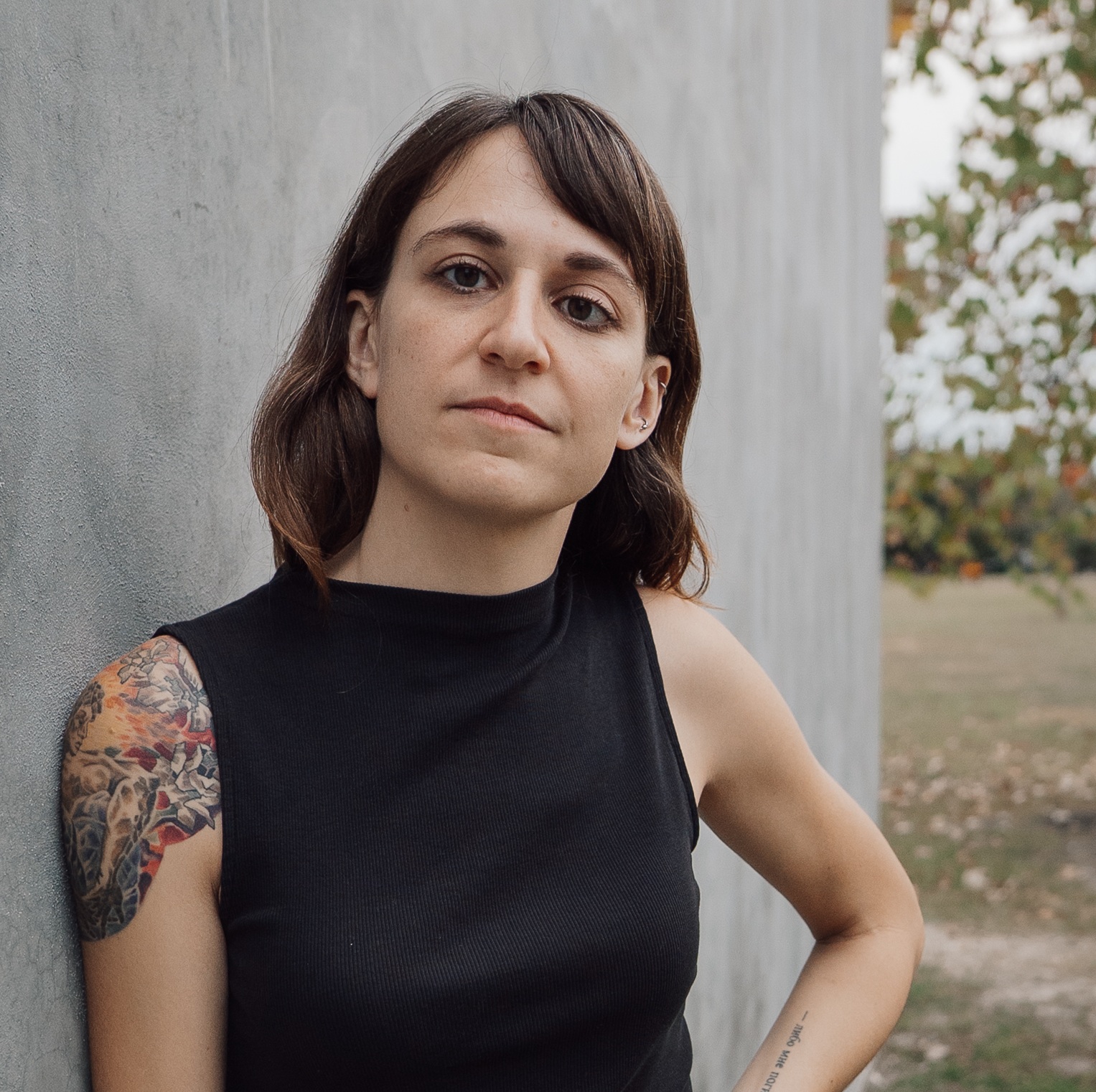
My guest today is Madeline Vosch, who teaches in the creative writing, humanities, and religious studies disciplines. At acc.
We discuss her book, A Memoir of My Suicide, soon to be published by Beacon Press. As you'll hear, the book integrates her interdisciplinary scholarly background and creative voice into a powerful invitation to explore the intersection of profound compassion and profound vulnerability.
Please note that this episode continues to contains discussions of self harm and suicide.
Madeline Vosh, welcome to the conversation.
[00:02:20] Speaker B: Thank you.
[00:02:21] Speaker A: So let's first talk about your work at acc, which has a whole lot of aspects to it, beginning maybe with the fact that you teach in three separate disciplines at acc.
You teach courses in our humanities department, you teach courses in our religious studies program, and you also teach with our creative writing department.
That all by itself, I think, is going to suggest to the reader that you have a diverse educational background and maybe you might just briefly give us an overview of what that all involves.
[00:02:56] Speaker B: Yeah, so, right. Just like you said, I teach humanities, religion, and in creative writing, and my background is very interdisciplinary, so in undergrad I majored in Russian, and then I went on to graduate school in theology, where I also studied queer theory and gender theory and then went on to study creative writing. And I try to draw on all of those in all of my classes. So in humanities we still focus on close reading and really studying texts. In my religious studies class we do the same thing. I try to bring in primary sources to look at for all of the different religions we study.
And then in creative writing, I also incorporate some of those different ideas. So there's a unit where we do.
And so I teach memoir and creative writing, and there's a unit where I have everybody write mythology as memoir. So the stories that you grew up with as real, how they shaped you. We draw on the work of Maxine Hong Kingston, who's a memoirist who writes about the stories that her mother told her and the stories that she grew up like ghost stories, as if they were real. So she writes about ghosts in the same breath that she writes about her childhood.
And so there are all of these ways that those disciplines intertwine, or at least I try to intertwine them in my teaching.
[00:04:20] Speaker A: Yeah. So I'm interested, I guess, in your teaching the memoir class.
Presumably students enrolling in this class are going to have some pre existing interest in memoir as a form, because I believe that the course that you're teaching, that same course sometimes is taught via other.
Other literary forms or other literary modes. Right.
So for those of us who haven't actively selected to take a memoir course, I have a question. It might seem kind of silly, but what's a good reason to read memoir?
[00:05:03] Speaker B: Oh, wow.
Wow. That is an excellent question.
I think memoir as a genre provides.
Oh, man. I'm like, wow, what a question. Why read memoir?
It is a way to think about life and a way to connect with other people and an entry point into some topics that can be really heavy. Obviously, some memoirs are not quite so heavy. There is actually a memoir by someone who lives here in Austin about his sort of coming to terms with having cerebral palsy. And it is so funny. It's a very, very funny book.
I don't typically laugh out loud when I read, but it had me laughing out loud. So. Right. Memoirs don't have to be heavy, but they are a way to think about some hard topics in life through a more personal lens. Rather than reading standard nonfiction where you learn the facts about something, this is learning someone's very personal experience with something, learning how people approach some of these hard topics in their lives.
I think also memoir just helps everybody think about their lives differently, especially when we think about literary memoir.
So my work is very voice driven. And a lot of the memoirs I love the most are also voice driven. So there's a book called Bluets by Maggie Nelson, which is about.
It's sort of a memoir, sort of not about her going sort of about a breakup, but the quote unquote plot or story is about her falling in love with the color blue.
And so. Right. It's giving us all of these different ways of thinking about loss through this, like, strange lens that maybe none of us would have thought of before. Like, how does A color have to do with losing someone you love?
[00:07:06] Speaker A: Yeah.
So it always interests me, you know, to the extent that you can talk about literature breaking through to the mainstream these days, every so often it does seem like a memoir breaks through to the mainstream.
This will show how old I am, but I'm thinking of, like, Augustine, Burroughs, Running with Scissors, and there's just something about a voice or a way that a story is captured that seems to speak to some universal interest, if not experience.
So you mentioned a local author, and Burrow certainly does this too, using humor as a vehicle for addressing some very difficult experiences.
But you'll see other modes or genres, if you will, woven into. I've encountered memoirs that will explore difficult life experiences through motifs and horror or through.
I've even seen one written in the form of, like, an analytic philosophy paper. But it's really talking about very personal experience experiences.
How do you find that your background in your other disciplines informs the way that you approach memoir?
[00:08:21] Speaker B: I think it.
This is also.
These are some good, hard questions.
[00:08:27] Speaker A: Well, I had time to think about them.
[00:08:30] Speaker B: I think partially it just draws me to those same memoirs that we're talking about, right? Like voice driven memoirs and memoirs that sort of, you know, they sort of swing for the fences and try something new and different, right. Like, again, thinking about that book, Blewitts, right? Like it would have been a very different memoir. And this woman has written more straightforward memoirs, but in that book she's just totally trying something new and maybe it'll work, but maybe it wouldn't. And I think that background in humanities, in reading all sorts of different literature, just makes me more drawn to the books that try something sort of weird, which, again, just helps give us different ways of thinking about these different topics and different ways of approaching just different ways of thinking about things.
I, gosh, I wish I could remember where I read this, but someone once was talking about academic theory as a form of creative nonfiction, right? Like a form of trying to think about the world differently.
And so I think about that same idea when I read memoir, right? Like just a way of trying to reconceptualize the world and a way of trying to reconceptualize our experiences in the world.
And I hope that answered your question.
[00:09:59] Speaker A: No, it does. You know, it's maybe tangential, but it. It calls to mind, like, a very peculiar feature of, like, late 20th century analytic philosophy, which I'm not expecting and rather hoping that most listeners have not spent a whole ton of time reading both late 20th century analytic philosophy, but it can be very dry, very technical stuff, but it's not uncommon to find, like in the middle of these highly technical papers some bizarre thought experiment that is so fanciful and, like, invokes Martians or, you know, hypothetical machines that can give you experiences even though you're not in the actual world that you're inhabiting.
But even there, you find these. These pockets of whimsy and creativity that find themselves in.
Well, I do have a bunch of questions about the way that your memoir is written, but I'd like to maybe just give a brief overview of the. Of the book itself.
So the title of the book is Undead. And I'm sorry, forgive me, the subtitle here, is it the Story of.
[00:11:07] Speaker B: It's a Memoir. A Memoir of My Suicide.
[00:11:09] Speaker A: Undead. A Memoir of My Suicide.
[00:11:10] Speaker B: And so just as a quick aside, so. Right. Like the publishing.
This is something that has been so interesting to discover the ways that writing and publishing sometimes butt heads.
So the title, Undead was the title. I knew that I wanted that to be my title from the day I started the book, but my publishing team really wanted me to change it because they were like, nobody's going to understand what this is about if that's the title. So that was something we had a bit of a back and forth about.
And the conclusion or the agreement we sort of got to was I get to keep the title, but the marketing team gets to pick the subtitle.
[00:11:49] Speaker A: Okay.
That's a compromise if I ever heard one.
[00:11:52] Speaker B: Yeah. So.
Right. There's so much compromise that goes into the marketing of the book. The selling of the book, even the COVID was not fully up to me. So a lot of the first things that a reader sees when they engage with the book are often not, perhaps not the author's choice.
[00:12:13] Speaker A: Yeah, sure. Well, now, if I understand right, you've published quite a bit already, but is this your first publication that's going to be marketed in the way that this is being marketed?
So probably an exciting time.
[00:12:25] Speaker B: Yeah.
[00:12:25] Speaker A: Okay.
And I imagine that your students, to the extent that they know about this, are probably pretty excited and wanting to know about it too.
[00:12:33] Speaker B: Yeah, well, so I actually have not told most of my students partially because.
Just because of the subject matter.
So I haven't. Yeah, I have not yet told most of my students. Some of them know I have a book coming out generally, but most of them don't know what it's about.
[00:12:50] Speaker A: Yeah. Okay. I kind can understand that as you're. As you're saying it. Well, so maybe to kind of just address the elephant in the room here.
So the title does indicate that this is a memoir of your suicide.
The, the title I think is telling.
So in like horror fiction, right. The undead are not like those who almost died but did not. Right. They are, they are typically like those who have come back from the dead.
And your. The subtitle is not Memoir of My Attempted Suicide, it's Memoir of My Suicide. Right. And the book is very much written as perspective. Like, no, this isn't something that almost happened. Right.
So you write in, in quite a bit of detail throughout the book about this.
I'm not going to call it a suicide attempt because if I recall correctly, the, the doctors don't understand how you, you survived this.
So the book you.
Plenty of detail here. But to kind of introduce the themes to folks who might not be bracing themselves for a book about this topic, how do you imagine that you'll be kind of broaching this with people who are looking at your book on the shelf for the first time?
[00:14:05] Speaker B: So.
Right. I introduce it as, I mean, I do introduce it as surviving a suicide attempt because. Right. In some ways, even though, you know, as I mentioned in the book, the doctors don't know how I survived, which, you know, is such a strange thing in and of itself, but I do introduce it as surviving a suicide attempt. And then I also most of the time give a little asterisk that while it is about an intense topic, part of the purpose of the book is to be a comfort to those who have survived something similar. So even though it is intense, my aim is that it is still a comfort.
[00:14:48] Speaker A: Yeah, the forward and afterward I think are really important in framing it in that way and very effective, frankly, I think, in framing it in that way.
Well, the content, the subject matter is certainly going to be interwoven here, but I'd like to actually approach the book by way of a few things that I have questions about formally.
So a moment ago I asked about the ways in which you're. Your background in humanities or religious studies informs the Ray you White memoir. And I'm interested in this because one of the first things I noticed about this memoir is that it has something that many memoirs I have read do not, which is extensive footnotes, many of which are going to call attention to peer reviewed journals and academic literature, some of which I was familiar with, some of which I was not.
And so that strikes me as kind of novel approach here. And so I, I wonder, like, how, how do you imagine somebody who, you know, maybe doesn't read, you know, Scholarly works, if you will, on a regular basis, might. Might receive this.
[00:15:59] Speaker B: So my hope is that it makes some of the scholarly literature feel exactly like, more approachable, more digestible. Taking some of these, these
[00:16:08] Speaker A: more.
[00:16:09] Speaker B: Oh God, what is the word I'm looking for?
Like ideas that are typically contained within academic circles and trying to make those more public because I think some of those ideas are so useful and so important. Right. Like, Lauren Berlant has an idea of slow death that I write about within the book. So Berlant's idea is that particularly in marginalized communities, there is a wearing away of a population and a wearing away of an individual through systemic factors. Right. Like through something like, particularly, particularly Berlin writes about, like healthcare, for example. So not being able to get health care and having to jump through so many hoops to get.
To get health care. Right. That just wears down at a person which eventually. Right. Results in something that Berlant and then later Jasbir Puar talk about as through the lines of debility. Right. It becomes a way of not being able to survive.
And so. Right. Take. I wanted to take some of those concepts and yeah, make them not just digestible for the reader, but to show the reader how applicable they were to our lives and also to sort of feel them, you know, to take that idea of slow death. Put it in the context of my book so a reader could really feel what that was.
[00:17:36] Speaker A: Well, so now it almost sounds as though it's not just your academic background, but maybe even like your work as a community college instructor. That's coming to bear here because that's an experience that many faculty have, trying to take maybe esoteric ideas from the lofty ivy towers, but making them not only digestible but. But relevant.
Yeah. So another thing that I think is going to be immediately obvious to folks who read the book is that it's structured in an interesting way. Right. So I'm sure that there is a term that people who are not so philistine about literature as I will have this. But it's episodic. Right. It's segmented, so it's told in chunks.
It is also not chronological. It's not difficult to put together the order of things. But I, you know, and the three sections of the book kind of correspond to broad periods of time around the. The events. But clearly there's a lot of thought that went into the. The structuring and the ordering of the book. And I wonder if you might have a.
A thought on how your reader might approach that.
[00:18:54] Speaker B: Well, Right. So I really wanted the, the first part to be the immediate, the very immediate aftermath. And I really wanted to put the reader in that moment of uncertainty and confusion because right in, in the days after, I had no idea how to make sense of what happened to me.
And I wanted, I wanted to put the reader in that moment right. Where things felt fraught and sort of unspeakable, unsayable and somehow outside of logic. Right.
First days of sort of wandering around and not knowing how to talk to people about it and sort of just not really having a framework of understanding. So I wanted that to come first.
And then the second part jumps back in time, telling the story of my childhood, my youth, which becomes a way to frame what happened before.
And so I wanted the reader to experience that confusion and then jump back in time to start to understand how we got to that point.
And then the ending jumps to when I moved to Austin and when things started sort of to come together, when things began to feel possible.
And so that was really what drove my thinking as to how to structure it.
[00:20:11] Speaker A: Yeah, well, I guess this is a good segue into a feature of the book that struck me as really interesting. So you talk about being disoriented and not being able to make sense of the experience, not having the words to experience. And, and I did notice there is a, a theme that occurs throughout the book about things that can't be said, but for different reasons. So you give examples of things that can't be said, perhaps because it would be too emotionally fraught to say them. So you speak about an experience where you can't tell your mother what has happened or, or where you've been. You talk about not deciding not to tell other graduate students in your graduate program the specifics of where you've been while you've been away. But then there are other moments where you talk about things that can't be said because they just can't be said. So you refer a lot to the biblical story of Jairus's daughter. Right.
And you know, throughout the book, you know, you're grappling with this, with this, you know, rather well known biblical story episodically as you're telling the story. And I won't say that it's a conclusion you arrive at, but you end up kind of saying, well, it turns out that you're not supposed to know what happens after the events of this story. In that sense, they can't be said.
And yet.
Right.
You explicitly talk about making a decision to say some things that can't be said.
Hopefully I'm not talking too paradoxically about this, but I caught onto this idea that like there is an attempt and a successful one here to, to directly speak to and give voice to experiences that a lot of people might assume to be unspeakable.
And so that, that decision, that, that attempt, I imagine that would have been difficult at first, right. Trying to grapple with things that maybe you believed couldn't be said. Did it, did it change? Was there like a period where that started to click and like a voice
[00:22:27] Speaker B: came together for this, that man? You've got some really good and hard questions, I think actually. So the more I actually focused on the story of Jairus daughter, the more things did start to click. So should I give like a background?
[00:22:42] Speaker A: For sure, yeah, please, yeah.
[00:22:43] Speaker B: So for those maybe less familiar. So in a few of the gospels in the New Testament, there's a story where Christ is summoned to someone's house because this man, Jairus, his daughter is dying.
And so Christ is summoned there to heal the daughter before she dies. On the way there, a woman reaches out and touches Christ's cloak as a way to heal herself. Christ is sort of delayed because of this. And in that moment of delay, Jairus daughter dies.
Christ then goes to her house and says, she is not dead, she is only sleeping. And she wakes up. And then the story, you know, it is, there's a. There's like a celebration, but the story goes on and then Christ says, don't talk about this to anybody. Right? Like keep this secret. People do talk about this, but it is supposed to be secret. Which is then interesting because there it is in the text itself.
[00:23:42] Speaker A: Clearly not a well kept secret.
[00:23:44] Speaker B: Yeah, yeah. It is being told in the text even as Christ is saying, don't talk about this. But one of the things that I got a little bit obsessed about for a while was the fact that the child was never named. She's only known as Jairus daughter. And she does not speak at all. Right. Like she dies, she comes back, she awakens in this room with this stranger standing over her.
And so the more I focused on that story and the more I thought about why doesn't she get a chance to speak?
Why is everyone supposed to be quiet about it?
Things started to click as to.
Yeah. Sort of the unspeakability of things and the utility or the.
What's the word I'm looking for? Not the purpose, but like why we should try to talk about things anyway. Even if they are unspeakable. Yeah, even if we fail somehow in how we say it or how we speak about it, like it is still important to attempt to speak about it.
Yeah, I think. Again, I think that answered your question.
[00:24:58] Speaker A: No, I mean, yeah, it certainly speaks to it.
Yeah. And I was struck by the way in which a few times you contrast this story about Jairus unnamed daughter with the probably much better known story of Lazarus. Right.
[00:25:15] Speaker B: Who.
[00:25:15] Speaker A: We know that dude's name.
[00:25:17] Speaker B: Right.
[00:25:17] Speaker A: We know more about this guy.
And really highlighting some interesting potential gender dynamics and other ways in which it may be that some people get to speak experiences that other people don't, and that that's an important thing to kind of factor into how we think about this as well.
Well, so maybe this is also a good segue.
You. You frame the last paragraph, if I recall correctly, of. Of the forward in an interesting way. You.
Well, if you don't mind, I'm gonna read it. That's okay. Yeah, I get my coffee out.
[00:25:56] Speaker B: Actually, while you get that out, is it okay if I make a quick aside?
[00:25:59] Speaker A: Yeah, please.
[00:25:59] Speaker B: So the title of the first section is An Archaeology of that Silence, which is actually a phrase I stole from Foucault in his volume, A History of Madness.
In his foreword or preface, he is writing about how he.
Oh, my goodness, now I'm going to forget the exact line, but he's trying to give a history of the birth of the asylum and sort of who gets to define what madness is, how we came up with our ideas of what is insanity, what is madness.
And so he uses this phrase that he is trying to describe the archeology of that silence that surrounds the people who were deemed mad, who were then put into asylums, who we never heard from again.
And so I took that subtitle, and I think this connects to that idea of the unspeakability, because for me, part of what made it feel unspeakable was because in the days after, I couldn't find any piece of media that spoke to that same experience of surviving an attempt.
And even though later I discovered there were some things that existed at the time, I was floundering and couldn't find anything. And so it felt like that same silence that Foucault talks about.
And so, again, just the unspeakability was partly because I couldn't find a script, I couldn't find a way that anyone else had spoken about it.
[00:27:34] Speaker A: Yeah, okay, so that section begins. Oh, no, sorry. The preface. That section, the foreword concludes with the following paragraph. Actually, it's kind of a convention to, like, authors read their own lines. Do you Want to do that, or shall I read it for you?
[00:27:50] Speaker B: It's up to you.
[00:27:50] Speaker A: Okay. All right. So just making clear that the I in this is not me, it's you.
So you write. I'm sure that there are ways that this book fails, maybe aesthetically, maybe in its argument. But I have learned over the years that sometimes telling this story out loud is worth all the risk that comes with it.
So that last line, I think, speaks to much of what you were just saying. But. But you. You say that this book maybe fails in its argument, and I, as, you know, somebody who has worked in philosophy, like, my ears perk up. Like, wait, what? This book is an argument. I don't usually see memoirs framed in this way.
And I might. You know, I will also say people trained in analytic philosophy have this perhaps unfortunate predilection to try to look for pithy summations of an argument where maybe that's not how particular arguments are structured.
But I was looking for it right in this book, and I found a paragraph toward the end that I think at least starts to summarize what I think you're after here. And I wonder if maybe you might be willing to read this one.
[00:28:59] Speaker B: Oh, sure.
[00:29:00] Speaker A: Okay. So it's the one that I have dog eared there.
[00:29:04] Speaker B: If we think.
[00:29:04] Speaker A: Yes. Yeah.
[00:29:05] Speaker B: Okay. So if we think of suicide prevention, suicide recovery, as more than just medical recovery, we might see it as more than the therapist, the friends that hold you accountable for your own life and the person you are, more than the antidepressants and medicines that can calm your mind. If we are serious about suicide prevention, we have to let the word expand, to hold all of these things inside of it, to hold these overlapping, intertwined things, to know that it is all these things at once, a medical response that does not assume a person is a contagion or a sickness, a world that does not create a vulnerability to despair, and a way to claim the self, the people we are, and a way to claim the things we can do to change ourselves.
[00:29:49] Speaker A: So I'm not going to say like, there, that's your argument. Right.
But it does seem that you want to persuade the reader of something here.
And much of much of the experience that you described, certainly in the immediate aftermath and in the second section in the book, give some context that kind of builds this idea out. Right.
There are some popular notions, misconceptions around suicide and what causes it that I think any reader of this book will quickly be disabused of.
And. And I think you're drawing attention Here to situational factors surrounding this that don't seem to factor into the conversation a whole lot.
So I wonder if maybe you might just sketch out what some of those might be, either in the whole or in your own experience, for sure.
[00:30:48] Speaker B: And so this actually connects back to something we were talking about a minute ago, because eventually I was able to find academic research that spoke to environmental factors that can.
This is in the words of Dr. China Mills. She writes that it creates a vulnerability to suicide.
And she writes specifically of public policies that leave people more vulnerable, that lead people to that same kind of wearing away that lead people to despair.
In the context of my own life, that really was partly just a personal history of trauma and not getting the like, just being totally unable to find the support and help I needed to deal with that. And partly the persistent experience of poverty that I couldn't seem to find a way out of.
And so in my own life, I would sort of vacillate between the poverty I grew up in and then feeling sort of comfortable in academic environments. It's like when I was in college, I felt both aware of the differences between myself and my peers, but also a sense of comfort in that space. But then as soon as I graduated, I went back to that same precarity, that same feeling of not being able to get my head above water.
And so for me, in the book, I really wanted to show how some of those societal systems, systemic factors, make suicide become almost.
Not just understandable, but in a person's brain, almost logical. Because you think, well, my life is not going to get better. This is just going to be my life forever.
And so what else can I do?
There's a quote that I use in the book from Jasbir Puar, where she asks, gosh, and now I'm not going to be able to remember the exact quote.
She asks, essentially what conditions in the world might suicide be a response to?
So saying suicide might not is not necessarily a personal problem, which it's often framed as, right, like a personal medical problem, but also a response to our environment.
So again, in my book that become. I try to really focus on the ways that poverty combines with all these other factors to make a person vulnerable to suicide.
It does get so complicated because it is both a medical thing. We can't disentangle those things. It is both a medical issue. It is both something that should be addressed in therapy and also a response to all these different environmental conditions and factors.
Part of the argument that I'm really trying to make is to understand how suicide is not just about an individual floating in a void, but is a person in relation to their environment, in relation to their context, who, for one reason or another, has decided that the world is unlivable.
[00:33:59] Speaker A: Yeah.
There are other important features of the way the popular descriptions of suicide and suicidal ideation often go that I think you also directly address in the book.
And some of these might be moral in nature, you might say. Right. So there's. There's a bunch of interesting literature on this, on how, like, in Victorian England, for example, suicide was illegal and, if I recall correctly, punishable by death. Which is, you know, ironic enough.
[00:34:36] Speaker B: Yeah.
[00:34:38] Speaker A: And there, you know, there remain a lot of kind of prevalent tropes around the idea that suicide is a form of cowardice or that suicide is a form of failing to acknowledge the sanctity of life and things like this. Right. There's. There's.
You don't typically find it framed compassionately in the way that I think the story you tell kind of forces the reader to kind of think about it compassionately.
How.
How much, if at all, were you, like, you motivated to kind of speak back to kind of some of these popular tropes about suicide?
[00:35:21] Speaker B: Man, that was like, a huge motivation.
So I. During my MFA program, I started writing this book, and there weren't any nonfiction classes, so I actually took a novel class and asked everybody if it was okay that I workshopped this book. And they were like, yeah, that's cool. And in one of the very first workshops, one of my peers actually said a line that shows up early in the book where she was like, you're writing about suicide in this way, but what about all of the people who regret it? All the stories of people who jumped off the Golden Gate Bridge and survived and talked about how much they regretted it. Why aren't you writing about that? And I was like, well, because that's not what I experienced.
And so often I would come across something like that and get quite angry and say, like, no, no, no, that's not. That's not what it was like for me. And maybe it was like that for some people, but there's not one narrative that can be applied to everybody.
There's another book I read as well.
Now I'm forgetting the name of it, but she does very much write about it. Suicide as a Moral failing.
Right. Which I just found I find deeply, deeply frustrating and deeply upsetting because it is a way to completely discredit the suicidal person and a way to frame it as, like, this person just doesn't understand their life, this person is sort of thinking irrationally, whereas in the moment, right in the moment, a person actually might be thinking totally rationally, as upsetting as it can be to think about that.
But a person might truly be thinking, well, I can't change my life. I am making everybody else's lives harder, so this is the best solution.
And there are also some notions that I similarly find troubling. The idea that suicidal ideation is completely a sickness.
That sort of logic then leads to an idea that the suicidal person or someone who attempts suicide not only needs to be hospitalized, but needs to be sort of quarantined from the general population because they have this sickness that could contaminate everyone else.
And so there are studies that show if a person does kill themselves, then other people around them are more likely to also attempt or to kill themselves. There's research that supports that. And this is often discussed in terms of it being contagious, the suicide contagion. But that language further entrenches the sense of shame and the sense that the suicidal person is fundamentally sick, fundamentally broken. And it is that type of language that a suicidal person can in fact internalize and make them feel like, okay, there is something fundamentally broken about me that is unfixable.
And so it's that exact kind of language that I'm really trying to push back against and question. So people can think about different ways of framing suicide.
[00:38:37] Speaker A: Yeah, if I recall correctly, you, you even, you very explicitly kind of linguistically tackled the phrase commit suicide in, in the book.
And I think it's become a little more in the, in the zeitgeist that you see this phrase avoided in favor of died by suicide.
But, but as, as you and other folks have pointed out, like we, we tend to reserve the word commitment commit as a pejorative. Right? You, you commit murder, you don't, you don't commit fun or something like that. Right. It's not the sort of thing that we tend to say.
And so, so the very, you know, the very idea that we, that we talk about it in this way has a sort of normative, negative normative bent baked into it.
You also give sort of a harrowing account, frankly of the, the care I'm going to use, quote, you know, scare quotes here, the care that, that follows a suicide attempt.
You even couch this in terms of things that a lot of people might not have thought about, like the prevention nets that have been installed outside the Golden Gate Bridge, how those can look like a compassionate life saving mechanism. But in Fact, if you look more closely at them, they are.
They punish the person who falls upon them.
And. And I think it's fair to say that in many respects, the experiences that you describe in the hospital that you write about sound like punishment.
[00:40:13] Speaker B: Yes, for sure.
[00:40:14] Speaker A: I wonder if you might be willing to share a little bit about that.
[00:40:18] Speaker B: Yeah. So, yeah, just quickly, as an aside, speaking because you mentioned the Golden Gate Bridge, I was really similarly to what you were saying. I was very troubled and disturbed. I was reading articles about when they put in the net to catch people who tried to jump off the Golden Gate Bridge. And the manager of the bridge explained that it feels like jumping into a cheese grater. Right.
This is the phrase that he used. This is painful. This is metal.
And he also said, we want people to know that it will hurt if you do this, which means it becomes a threat.
It's not just saying, we will save your life. It's also saying, saying, how dare you think of this? How dare you try to do this? We're going to punish you for it. We're going to both say, like, we are going to do what we think you need by saving your life while also punishing you for this.
So. Right. When I read those quotes, I was very troubled, to say the least.
And then in my own experience, and I always want to offer some caveats that I know that there are some programs and some hospitals that are really effective, that are really wonderful and provide really excellent care.
I never want it to seem like my experience was what everyone experiences. And I don't want to discredit medical institutions who might provide the care that a person needs. But I think partly because at the time I was on MassHealth, which is.
I always forget if it's Medicaid or Medicare. It was one of those for people in Massachusetts who don't make very much money. And so it was. The state provided health care, I think partly because I was on that, they sent me to not the best hospital.
There's a hospital actually in Boston called McLean, which is sort of famous like the. The doctor. One of the doctors there basically invented dialectical behavioral therapy, which is now one of the. The primary modes of doing therapy.
God, what's the word that I'm. I don't remember, but.
Right. And that was, you know, that's the hospital Sylvia Plath went to. I think that's also the hospital that the woman in Girl Interrupted went to. Like this. This. It's just. It's very famous. It's very well known.
And I was sent to this place sort of outside Boston that, you know, I later learned was a for profit institution.
And it very much just felt like a holding cell and felt very much like we were just there.
We were just sort of thrown there to keep us almost, you know, I don't want to use the term imprisonment, but we were. We were sent there to be locked up and kept there until someone else decided it was okay that we left.
And so the treatment was sort of being forced to participate in different kinds of group therapy, which were totally unhelpful. And then you would meet with a doctor maybe once and they would meet with you for, I don't know, half an hour, tell you some new medications that you had to try and you didn't really have a say.
And then you would maybe meet with a social worker once for half an hour.
And then you were sort of just left to be supervised by these nurses and medical technicians who very clearly sometimes just absolutely hated their jobs. There was a man who, very clear, saying that he didn't like us, was putting it lightly.
And then this man had power over us and could.
Could help decide if we could stay or if we could go. And so for many of us who were there, it became almost like we would strategize, what do I have to do to get out of this place sooner?
I had conversations with people where they were like, yeah, I have to go to this many groups a day because I'm trying to get out sooner. And someone else saying, I have people coming to visiting hours every day so I can prove that I have a support system so I can get out sooner.
Like, nobody was quote, unquote, getting better. Everybody was there to. Everybody was just desperate to leave.
Yeah, it was.
For me, the only way it was really helpful, if we can even use that word, was there was a woman there who I absolutely hated.
I met her, I think, maybe once, maybe twice.
And she was so condescending and told me that a person like me was so depressed that I couldn't think straight and that I didn't know it was good for me. And before long, I was going to be back there.
And so when I was out of the hospital, I was kind of like, am I allowed to cuss?
[00:45:29] Speaker A: Yeah.
[00:45:30] Speaker B: Cool.
When I got out of there, I was like, wow, fuck this woman. I need to prove her wrong.
And so I was very angry at her and very, like, that was weirdly very much a motivator for me to change something because I was like, this woman cannot be right about me. And I never want to end up in a place like that again.
[00:45:54] Speaker A: Yeah, well, and here you are. She was clearly wrong.
Yeah, I recall that in the book. And feeling the kind of the motivation along with you as you're telling the story.
So, you know, we're sitting here now, years later, in a very nice library at a downtown campus of Austin Community College, and we're a few years removed from the experiences that you're writing about here. And it occurs to me that you've called attention to a broad range of situational factors, any one of which, if it were changed, could be seen as a form of suicide prevention because that could make a significant difference in a person's circumstances.
And we know that it's not just like in, in this particular part of the world where we live. Like, a weird thing about humans is that like, no matter where you look, suicide's always in like the top 10 causes of death among adults. Right.
So there are many experiences that might be associated with this phenomenon. There are many factors that might be changed, but the ones that you're calling attention to, isolation, a lack of support, the poverty, lack of access to medical care. Although you even say it like you were very grateful to have had access to mass health. But you point out many times in the book, like, if not for like one little act of bureaucratic kindness from the person who happened to be at the desk that day, that could very easily have been pulled from under your feet as well.
All of these situational factors, I think, are widely present at an open enrollment institution like acc.
Right. Which is not to say that, you know, everybody at ACC is, you know, experiencing suicidal ideation. But, but for all we know, right. The work that you and I or we collectively do to try and address things like food insecurity, to try and provide, you know, mental health support for students, if, if, you know, if I follow the reasoning of your argument, could be seen as a form of suicide prevention.
[00:48:12] Speaker B: Absolutely. Yeah.
[00:48:13] Speaker A: So in that sense, I mean, it's, I guess it's, it's.
It's maybe a little self congratulatory to think that, like, what you're doing can be a matter of life and death. But it's, it's maybe helpful to be reminded every so often that maybe it is.
[00:48:27] Speaker B: Yeah. Oh, absolutely. Right. And especially. Right. Working with the students that we work with, you know, it is so easy for me to put myself in their shoes and to, you know, since I have had so many of the same experiences. It is, yeah. Easy, easy to see the ways that a student might fall through the cracks. And so us try to address that. And again, sometimes it might not really feel like life or death, but we can do things that might seem simple, that can fundamentally change a student's experience not just of ACC, but their day to day life.
Again, not to sound, I don't want to sound self congratulatory either, but there have been a couple students who have expressed to me living with food insecurity. And so I sat down with them and sort of coached them through how to get food stamps.
And again, a thing like that might not be life or death, but the student suddenly having $200 a month to spend on food, that can be life changing because that also could mean there's such a cascading effect. Right. Because having access to a thing like food stamps can then mean needing to work a few hours less a week, which can mean having more time to study, which could also even just mean having a few extra hours to sleep or a few extra hours to spend with your friends or loved ones.
And so, yeah, I think sometimes the work that we do can have such effects that we might never see.
[00:50:03] Speaker A: Yeah, well, and I wonder maybe if it's.
I'm not congratulating myself here because I didn't write the book. Right.
I wonder if there's some sense in which, you know, a huge situational factor that could make a big difference is precisely the presumed unspeakability about suicide that I think we kind of take for granted.
And I, you know, to that end, I think that telling a story in the way that you have and telling it, you know, publicly and, you know, boldly and bravely may also be, I think, a big part of the recipe, if you will, for healing some of that. Well, to that end, we take the phrase loving our students to success at ACC to be part of our motto. And I just want to thank you for sharing your story with the listeners, sharing your book with the listeners, but also for bringing the, the compassion that's clearly in the book to the work you're doing with your students here at acc. Because loving people to success takes many forms and not all of them are pretty. So yeah, thanks Madeline. It's been a real pleasure talking with you.
[00:51:17] Speaker B: Absolutely. Thank you so much. And yeah, thank you for the very good and difficult, in a good way questions.
[00:51:23] Speaker A: Well, maybe, you know, for the next book I can take another shot at it.
Take care of. Good.
[00:51:27] Speaker B: Thank you so much.
[00:51:38] Speaker A: If you or someone you know is in crisis, you can call or text 988 to be connected with the suicide and Crisis Lifeline. The service is free, confidential and available 24 hours a day.