Episode Transcript
[00:00:00] Speaker A: This was made by humans.
[00:00:05] Speaker B: Welcome to Austin Community Conversations, a podcast featuring discussions about the interests, backgrounds and projects animating the members of a vibrant college community.
The views, thoughts and opinions expressed are the speaker's own and do not represent the views, thoughts and opinions of Austin Community College. The material and information presented here is for general information purposes only. The Austin Community College Community college name and all forms and abbreviations are the property of its owner and its use does not imply endorsement of or opposition to any specific organization, product or service.
[00:01:11] Speaker C: The Creative Writing Department at Austin Community College offers an opportunity that is fleetingly rare among contemporary higher ed institutions, a carefully developed curriculum that introduces and supports student authors across a range of literary genres and modes available in the context of an open access institution.
In short, the program invites anyone who wants to explore their creative potential via the written word to do so, to be taken seriously in that endeavor, and to participate in a creative community in direct conversation with contemporary poets, novelists, playwrights and memoirists.
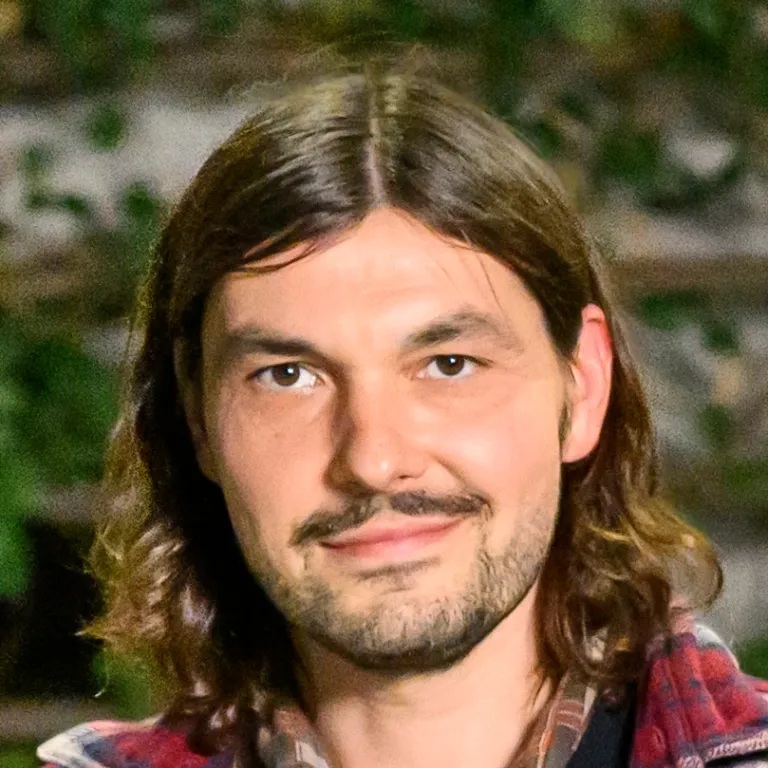
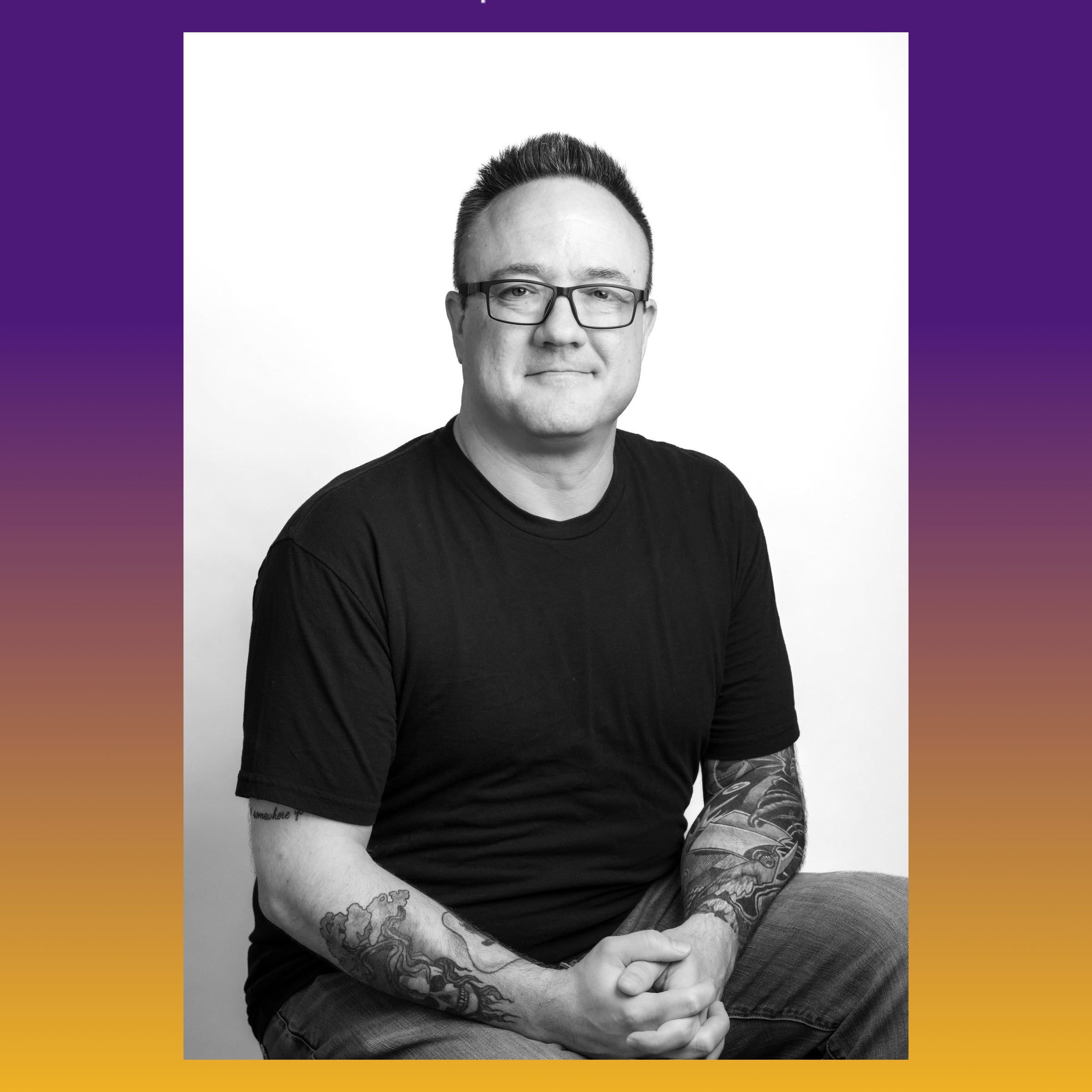
My guest today is Eli Reiter, a full time faculty member in the Creative Writing department at acc.
Given that this episode will go live in the last week of October, I thought it fitting to feature Eli not only for his contributions to instruction and programming, but for his work as an author of horror fiction. Here we talk about his own road to joining the ACC community, his thoughts on the horror genre as both an object of study and as a creative outlet, his views on the role that generative AI might play in the future of fiction, his role in the Creative Writing Department's own podcast, and other topics. Let's dive in.
[00:02:26] Speaker A: Eli Reiter, welcome to the conversation.
[00:02:29] Speaker D: Well, I'm really happy to be here.
[00:02:31] Speaker A: All right, very good.
As is the custom in these interviews, I like to begin, given that you're instructional faculty among your other roles at acc, to talk about the path that you took to the classroom, what was your academic background and what led you to teach in what is in some ways kind of an unusual program at a community college.
[00:02:56] Speaker D: It's definitely unusual. I've looked a few times to see if there's another creative writing department at a community college in the country, and I can't find one. So we are pioneers on a solo raft and a vast sea of work that we get to do.
I was a community college student myself. I went to two different community colleges while I was trying to figure out what I wanted to do and then ended up working retail for 10 years between finishing my community college stuff and then when the housing bubble popped, I was working in Orange county. When the housing bubble popped in 2008 or nine, and I ended up getting laid off.
And I went back to school, not really knowing what I wanted to do, but I knew I liked to read. I knew I had an interest in writing. And so I decided to be an English major. And I think it was maybe the third day of my first upper division lit course.
Stephen Fry, Dr. Stephen Fry, walked in with a stack of books. We were doing Modern American lit, and He's a Cormac McCarthy scholar, and he's pretty widely known in McCarthy circles.
He sat down with a stack of books and then sat on the desk, sat next to him, and then for 90 minutes, we talked about books. And it was one of the best conversations I've ever had. And the thing I remember most about it was he left the room, and I packed my stuff up, and I said, wait a minute. That guy gets paid to do this thing that I've been looking for all of this time.
And I decided then it was 2011, that I wanted to teach. I didn't know what level I wanted to teach where. I didn't know where I wanted to teach. I knew it was probably going to be English. And then I didn't look back. I finished my bachelor's degree at Cal State Bakersfield. It was a satellite campus in my hometown of good old Lancaster, California, right smack in the middle of the Mojave Desert.
[00:04:48] Speaker A: Yeah.
[00:04:49] Speaker D: And went from there to a master's in English with a concentration in playwriting at Cal State Northridge, and then immediately went from there to an MFA in fiction at UC Riverside, knowing the entire time I wanted to teach. And at UC Riverside, I got to work with Todd Goldberg. He's a big crime and noir writer. Got to work with Stephen Graham Jones, who's a big horror writer.
I got to work with a lot of fabulous people there, and I knew the entire time I wanted to teach. And here I am.
And I'm very glad to be doing this kind of work with students, being able to create spaces where students get to be as creative as they want to be in a place that values that kind of creativity.
[00:05:36] Speaker C: Yeah.
[00:05:37] Speaker A: A couple things in there stand out to me as being a particular interest. So you said that before you enrolled in a bachelor's program, you'd already been working in retail for 10 years. So if I may speculate, that places you in your mid-20s, right? Mid to late 20s.
[00:05:53] Speaker D: When I started working on the upper division stuff, I was 31.
[00:05:56] Speaker A: Okay.
And you indicated that you had an interest in writing, but you were not at that time. Publishing or like a working writer, per se.
[00:06:04] Speaker D: Not at all.
I remember being thoroughly entertained by the angsty middle school and high school poetry
[00:06:10] Speaker A: that I would write.
[00:06:11] Speaker D: And when I was still figuring out, like, what to do after high school, I always had a notebook with me, and I would sit at, you know, diners and drink coffee all night and, you know, write. And I had friends that we would, you know, trade back and forth.
[00:06:26] Speaker A: We'd.
[00:06:26] Speaker D: I'd read a line, they'd write a line, and we would just kind of mess around that way.
[00:06:29] Speaker C: Yeah.
[00:06:30] Speaker D: But I never thought it was something I could take seriously enough until my bachelor's degree, where I saw people making a paycheck just based on their love of.
[00:06:40] Speaker A: Yeah.
[00:06:40] Speaker D: The written word, not anything they had actually written. And reentering academia, I found all kinds of avenues where I could take not just loving to read, but wanting to write and turn that into something that could sustain some kind of livelihood.
[00:06:54] Speaker A: Yeah.
[00:06:54] Speaker D: And I'm really, really happy to be able to.
To be able to be able to have that livelihood. Also be primarily showing other people those same paths.
[00:07:06] Speaker A: Yeah. In an institution where this experience that you had of being in your early 30s, still exploring what it was ultimately you wanted to do, and not having a necessarily clear sense of how that was going to turn out, where that experience is so common for the students that we're working with, I think it's really important to stress that unlike a place like UC Riverside, for example, where it's probably not a mistake to assume that the majority of your students are going to be of traditional entering college age and they'll be working toward a degree, the average age of a community college student is in the upper 20s. You tend to work with a lot more students. And if your experience is anything like mine, I can't tell you how many times older students have come. It's their first class in my discipline, and they bring this sense of embarrassment, as though there's something wrong with the fact that.
That they're coming late or it's too late to get started.
And I think it's really powerful to actually be able to model for those students that like, no, I did it, and so can you.
[00:08:15] Speaker D: I can think of a student I just had this last semester in a comp course who kept talking about how she was deeply afraid at the beginning of the semester. She was deeply afraid to write an essay because she hadn't been in a classroom in 20 years, and she was coming back to things and being able to create an environment where that Fear became a motivator and content to write about too.
She turned out some brilliant work, and I did what I could to try to sway her away from the science field that she was working toward, where I know she's gonna be happy to something where she used some of that talent and, you know, I wasn't successful. But where I think the big success is, is at the end of the semester, not only was that fear gone, but there was also kind of a. Kind of a love for writing. And I think those. Those kinds of successes where. Where students who are not of a traditional age who are discovering things, whatever they end up discovering as a joy or some kind of a spark, I love being able to do that for people who haven't had that spark that then find it, whether it's a field that I have experience in or think that they would thrive in or not. The spark is the point.
[00:09:31] Speaker A: Yeah, that's right. Well, with respect to your anecdote about that student, all hope might not be lost. Occasionally you get like a Ted Chang who works in tech but also manages to write incredible fiction.
So you went through an MFA program and more frequently, I would expect, when people think about academic work in creative writing, specifically, not English or literature, but creative writing, an MFA program is what tends to come to mind. Or if you were to run a web search for college courses in creative writing, that's what you come across.
How would you describe the similarities or differences between.
What approaching creative writing academically through an MFA program looks like versus what's done at acc?
[00:10:27] Speaker D: That's an interesting question, because I think an MFA program is going to assume quite a bit of practice and quite a bit of focus.
But once we're past that assumption, the work is largely the same, the MFA program. When you arrive with that focus, we know what genre we want to work in, and we've built up work habits enough and a work ethic enough to have finished a bachelor's degree at least.
So it's easy to say, okay, here's the rhythm that we're going to write in. Here's the way we're going to talk about writing now go on your own and do those things. Grad students and grad students tend to do that.
I think the work that we get to do with students coming in at the very beginning of their bachelor's paths in creative writing is starting to say, okay, this is what focus looks like. Let's help you find what your focus is going to be. This is what a writing routine looks like. Let's help you find what that writing routine is going to be.
So then we're able to, I think, in a way that MFA programs don't have access to look at the roots of the desire to write and then cater a program to each student based on their roots, instead of catering a grad program to each student based on what they've. The roots they've dug themselves.
So there's a little more freedom in what we get to do and there's a little more challenge in what we get to do and what we get to do too. Not that teaching an MFA program is not challenging. It's a different kind of challenge. But I think that the students that are coming in with us are early enough where the clay is still malleable and we get to help them find the shape they want to take instead of aiming that shape at something.
[00:12:23] Speaker A: Is it fair to say, and I don't want to indulge stereotypes about writers or MFA students.
Is it fair to say that MFA students, in virtue of already having experience sufficient academic success to get into an MFA program, are also typically going to enter with a kind of confidence that might not be appropriate to assume for entry level students at a community college?
[00:12:48] Speaker D: I think that's dependent on the culture of the program.
And I say that because I've been to.
My MFA program was a low residency program that embraced genre. So there were horror writers, there were fantasy writers, there's crime writers, comedy writers too, just in fiction. And they covered screenwriting and poetry and playwriting as well.
And that, that kind of open minded, bring what you love to write, we've got people for you to work with, generated a confidence that was also supportive. So it wasn't a, I've arrived here, I'm the big brain, I'm going to teach the people in the room how I write. As a grad student, it was more, these are the tools that we get to play with in the sandbox. What do we get to make together?
But I've also seen in more than one institution, I've gone to readings and discussions at several institutions where the culture of the program is reflected in grad students that have wildly different attitudes than that one in particular I can remember where.
And I'm going to make this as non identifiable as possible.
[00:13:59] Speaker A: Fair enough.
[00:14:00] Speaker D: But one prominent writer in, a very recognizable writer in his genre came in and because very prominent, very recognizable, has done readings and discussions for decades at this point, came in nonchalant, came in relaxed, came in, this is a good time for everybody.
And the questions that were Asked during the Q and A that the students asked from this program were accusatory, they were aggressive, they were a little demeaning toward not just the writer, but the genre.
And it was wonderful to watch the writer respond with the same nonchalance and the same, like, I understand the vibe was that the writer fully understood what was happening and cared very little, like, was just completely unbothered by the reaction to students.
And in that moment, I was really, really fortunate for the culture of the program that I got to be a part of, and also really fortunate for the. Really grateful for the culture that we get to build with our students that includes some of that. We're all in this together that I don't think was present in that particular program.
[00:15:10] Speaker A: Okay.
Yeah, fair enough. And that's probably not surprising in terms of the wide range of graduate program cultures. You find that in a lot of disciplines.
So segueing, based off of what you said about the program at Riverside where genre was accepted, it was part of the culture.
You do tend to specialize, I understand, in genre, specifically in the genre of horror.
[00:15:34] Speaker D: I do.
[00:15:35] Speaker A: As it happens, this is my own favorite genre and literature as well. So there's some. There's some lucky happenstance there.
And I wonder how much that shows up specifically in the work you do with students. Do you find that that's a prominent interest in the students that come to you.
What role does it play in your teaching?
[00:15:56] Speaker D: Well, I do.
I have taught a horror fiction creative writing class, and the. The two times that it's been offered, it's filled really, really quickly. And when we talk about it, people are really excited about being able to write horror. Right. And I'm. And I'm also teaching a literature course focused on ghost stories, which is. It's a literature for creative writers where we're going to read ghost stories and write ghost stories, and they tend to fill up pretty quickly. So I think interest is there. Right. But in all of my other teaching, and this covers cop, too, even academic writing and creative writing, I think the thing that I love about horror is the emotional depth that it can achieve.
[00:16:42] Speaker A: Sure.
[00:16:42] Speaker D: But I think that that emotional depth is core to all writing that is compelling.
So the way I talk about horror, I mean, fear. I think fear is probably the most powerful emotion that we feel. It's the only thing that can override our conscious responses to things and put us in these autonomic responses where, you know, fight, flight, or freeze are not choices that we make. Right. So if we can. If we can create an Emotional experience that starts with fear as a vehicle to another experience, then we've kind of opened the aperture to the depth of the next experience.
Right.
That emotional experience is what I'm trying to pull out of all of my students writing because we. Where we really connect with each other.
I mean, some people are deeply interested in technical aspects of art, and there can be connection there, but that deep interest is a passion, which is an emotional response. Right. And I think. I think when we can.
I think when we can make our writing as emotional as possible, it's as compelling as possible. And I think that's where my penchant for horror shows up is. I'm looking for that really intense emotional experience.
And that comes out of being able to have intense emotional experiences. And fear doesn't give us the option of saying no. If we've signed up for horror, then we know there's going to be fear. Fear is going to be intense.
And I also. I mean, this is another.
Another part of it, too.
I don't know if you've ever heard people, you know, decry horror movies and say, no, I've never heard.
With the very specific, no, that wasn't scary at all. That didn't scare me. Nothing scares me. Like, I don't. I don't have time for that approach. You don't like horror, then? Yeah, like, if you like this stuff, then you're there to be moved in that way, that particular way.
So the. The emotional experiences that I want my students pulling, putting into their writing, I want people showing up to say, okay, if I'm looking for a love story, then I want to be open to how that love story works. So much so that I'm blown away by that particular story.
And the only way to do that is to be fully invested in the emotional experience we're putting into the story. I think that works for academic essays, too. What makes an academic essay compelling still still depends on a reader's interest in the work.
And I think that also. So that shows up in how I talk about academic essays. They almost end up being personal essays that talk about factual things so that they're not bored writing them, so that we have an emotional experience based on something that isn't just popular entertainment. And I think that my goal. I don't know if this works or not, but my goal is to let that also open the door, widen the aperture for emotional experiences in other kinds of academic realms too.
[00:19:36] Speaker A: Yeah. And it also probably opens up an opportunity to explore the emotional experiences of others.
So I always, in A kind of paradoxical way. Love it. When I watch a horror film that has been suggested to me as something that's really scary, and I don't find it scary because the immediate question that comes to my mind is, isn't it interesting that there are other people who are moved in a deep way that does not move me? What's that about? Right. Why is it that we see. And I have to imagine, because it's just such a staple of kind of academic work around horror, that your courses give students an opportunity to explore kind of movements and horror and why it is that you see radioactive giant monsters in the 1950s. It's not that hard to kind of connect that with the atomic age and everything, but, you know, it gives a really kind of powerful window into the kind of deep psyches of other people and culturally, too.
[00:20:35] Speaker D: Right, right.
I think.
I love that the approach there is that this was recommended to you and you don't find it scary. And the response is curiosity. Because I think that when we're able to connect emotionally with art, we learn empathy. Empathy. Right. But when we have that moment where somebody says, this movie blew me away, and our response is, not me, the next natural question is, well, why not? But so then we start to. We get to. If we get to. If we explore, we get to learn a little bit about our emotional responses and kind of expand our empathy. Okay. What did this person see in this that I'm. That I'm not seeing? What lens would experience. Have I not got that made this compelling?
So it takes that idea of empathy that art teaches and then adds curiosity. So now we're seeking out those connections too.
[00:21:27] Speaker A: So, full disclosure, I did get an opportunity to read one of your published stories. I believe it's the one called what should have Been.
So I don't know if this was an older story or recently.
And so get this out of the way. I liked it very much. Right. But one of the things that I noted was that. That it did a really interesting thing with a trope.
[00:21:52] Speaker D: Right.
[00:21:53] Speaker A: Like, I can imagine someone missing that it was a. That it was a horror story or a horror adjacent story on first read. Because a really common trope in horror, which is, you know, supernatural contact with those who have died, it's very subtly woven into the narrative. Definitely there. And it packs an emotional punch.
[00:22:15] Speaker D: An interesting choice of words woven in, too.
[00:22:19] Speaker A: Yeah, that's right. That's right. Yeah.
[00:22:20] Speaker C: Yeah.
[00:22:20] Speaker A: I'll leave that to the. To the audience to discover why that's a. That's a funny thing to say.
[00:22:24] Speaker D: Yeah.
[00:22:25] Speaker A: And so that leads me to wonder.
Genre fiction and genre film, you know, is often criticized on the grounds of relying so heavily on tropes. Right. And, you know, I'll set aside kind of broad, you know, things that we could argue about all day about whether genre is even a meaningful term. Some people think that all fiction is genre in some sense.
But when you're, when you're working with students or in your own writing, what, what is the significance of tropes to you?
Do they matter? Or, you know, do you worry about whether you're working with them in any particular way?
[00:23:05] Speaker D: I think, I think first and foremost, tropes do matter. I think that we're all walking on the, the stones that were painted by the people that did the writing before us.
So in a very real way, I mean, the immediate tropes that, that we, that we first think of with horror are probably going to be like werewolves, vampires, ghosts, demons.
[00:23:26] Speaker A: Right.
[00:23:27] Speaker D: And, and all of those, all of those tropes come out of cultural fears.
And I think in, in that, in a very real way, their tropes are kind of the core of what horror is.
Because I don't think that you can get through a. I don't think you can get through a horror reading list without touching on somebody's take on vampires. Whether and what I've seen, what I've seen happening more lately are kind of emotional vampires or the idea of a vampire taking some kind of life force. It's just a different kind of life force. Right.
And reworking the, reworking the lore around it.
And werewolves, zombies too.
The really interesting thing that the Walking Dead did is it treated zombies as though no one in that universe had ever had the idea that zombies existed. Yeah, they didn't use the word zombies. It was walkers. We didn't have a word for it in that universe. And just that was enough of a turn on the brain eating zombie. That was a fresh approach that allowed us to live in that world instead of our thought about what that world would be.
[00:24:35] Speaker A: Yeah.
[00:24:37] Speaker D: And you know, and another interesting take, like we, you know, 28 days later turned zombies into fast and angry monsters. Instead of slow and lumbering, they're just instantly phenomenally more frightening by turning that twist. So I think that the, the tropes are, are vital to the existence of horror. But then one of the fun things that we get to do is fool the audience a little bit. We get to, we get to surprise the audience with a new take and elevate by making the zombies by making these zombies faster and angrier.
[00:25:11] Speaker A: Yeah.
[00:25:11] Speaker D: Right. And making it so that they have ranged weapons. One of the other things that 28 days later did was make it so a bite wasn't the thing. It was just contact with the blood.
[00:25:19] Speaker C: Yeah.
[00:25:20] Speaker A: Oh, yeah. Droplet in the eye still kills me every time.
[00:25:22] Speaker D: Heartbreaking.
Yeah, that was heartbreaking.
[00:25:26] Speaker A: Yeah.
[00:25:27] Speaker D: You know, and I think about.
And I know I've mentioned. Anybody who talks to me knows that I'm going to mention Stephen and Graham Jones in a conversation about horror, but if we're talking about tropes, I mean, he's got mongrels, which was his approach to werewolves, which did not adopt existing lore. It actually talked about existing lore that happened in movies as things that were not quite right.
But his approach to that was making it a family story, a coming of age. It was one of the most heartbreaking things I've ever read.
And he also turned the vampire trope on its head with a buffalo hunter.
[00:26:07] Speaker A: Yeah. Recent novel. Yeah.
[00:26:09] Speaker D: Which I don't. I think one of the. One of the coolest parts of that about that book is the recontextualization of what a vampire is. So I don't want to. I don't want to spoil it for anybody, but it's a different kind of creature that I think that I think is turning those tropes on our. Turning those tropes around, creating new things out of what we think of what exists.
Gives us all kinds of opportunity for fun.
[00:26:36] Speaker A: Yeah.
[00:26:36] Speaker D: In the horror sense.
[00:26:38] Speaker A: Yeah. That novel the Buffalo Hunter X Hunter gives a really excellent opportunity to kind of viscerally experience what it's like to be that kind of creature as well, which is really powerful. Yeah. Well, so, yeah. Thinking about tropes before we move on to the next topic, in the case of zombies, as you said, 28 days later is going to, you know, introduce bass zombies and have us recontextualize them in that way. If we. If we look, you know, even further back to like the earliest zombie films, I don't know, White Zombie or something like this. You also see this interesting shift from describing zombies as a supernatural phenomenon.
[00:27:18] Speaker C: Right.
[00:27:18] Speaker A: Associated with maybe some kind of religious traditions or something, to something that's described in a purely naturalistic way. Right. It's a virus that, you know, makes people act this way in the film.
These tropes are always evolving and changing. And I wonder in the contemporary horror landscape if there are any particular tropes or changes that interest you. So here I'm specifically thinking that I've Noticed that over the past couple of years.
Whereas I would have formerly associated tropes with mythical creatures or monsters, vampires, what have you tropes now, you know, the first thing that comes to mind is trauma or distrust of authority. You know, the kinds of things that I would expect to see in contemporary films. And I wonder what interests you about what's happening now and the directions that we're heading.
[00:28:07] Speaker D: I'm really excited about AI horror and tech horror has been around for a long time.
Science fiction horror, you know, we go back to, I think Richard Matheson and I am Legend, is where we kind of get an introduction to science fiction horror.
But we can go back to Frankenstein as well, where Jules Verne was painting these tense but pretty pictures of steampunk.
Mary Shelley took the other angle and gave us that science fiction horror, where we are now. I think Paul Tremblay is openly working on an AI novel that I don't know anything else about, except that he's posted that he's talking about an AI, a novel about the horrors of AI and he's not the only one.
Seeing what reliance on AI does to our attention spans, our critical thinking, our dopamine reliance is frightening in the real world.
So seeing. Seeing tech horror and, you know, we can even say, see bio horror a little bit, become like, move into this world where. Where AI becomes the authority that we distrust. Yeah, I'm really excited to see how all of that's going to play out.
And a lot of stuff, I think. What was it?
Deus machina.
[00:29:40] Speaker A: Yeah. Oh, yeah. Ex machina.
[00:29:41] Speaker D: Ex machina.
[00:29:42] Speaker A: Al Karlingfeld. Yeah.
[00:29:43] Speaker D: Yeah.
I think it gives us a really great introduction to that. And I mean, how to it. Was it HAL 2000 Space Odyssey?
[00:29:51] Speaker A: Right.
[00:29:52] Speaker D: We have these inklings that these. That these things are rising, but I think we're going to get a wave of AI horror that's going to be.
That's going to be amazing. The other thing that I really love seeing, and I know that the substance was not the first instance where exploitation was highlighted as the trope, but the substance blew me away.
It was that it's not a movie for beginners.
It is not structured or paced the way you would typically expect.
[00:30:27] Speaker A: That was a long, slow film.
[00:30:29] Speaker D: It's a long, slow film, but by the end of that movie, you know, you're a frog in boiling water and you do not want to go anywhere. Yeah, but that. That's kind of the pace. And I realized, I mean, my mouth dried out in the theater because I. My jaw was was dropped for the last 45 minutes of the movie.
And it's really making the audience complicit in this exploitation and then pointing out to the audience that they are complicit in the exploitation by making it such a spectacle that is enjoyable to watch.
So the layers and layers of meaning there.
I also yesterday watched Jordan Peele, produced a movie called Him.
[00:31:10] Speaker A: I just saw this recently with my
[00:31:11] Speaker D: son, and I got the same kind of ideas from that film. And I think that critics didn't like it very much for reasons that I don't agree with. I thought it was great.
It was visually stunning. But I think when with exploitation horror, which I'm sure has probably been happening for quite a while, but this idea that when we see the exploitation happen and then the movie or story tells us very clearly that we are the
[00:31:42] Speaker C: problem,
[00:31:45] Speaker D: I think that's a really fascinating and brilliant way to honor the genre while also.
While also really sinking into the social commentary horror's really good at by making the audience complicit in the thing that it's criticizing.
[00:32:01] Speaker A: Sure, yeah. There's a couple of things that stand out to me there. So, one, with respect to the film, him, I had to chuckle because I also was really impressed by the film. And when I was looking at not just published criticism, Reddit threads and stuff, a common criticism that I saw was it got so weird at the end. And I thought, like, yeah, that's why it's awesome.
Horror fiction, once upon a time would have been called weird fiction. And those kind of cosmic elements, if you will, I think are also showing up in interesting, interesting ways in contemporary work.
So there's a specific kind of horror, maybe tying back to your work as a writer and teacher.
That popped up when you. I asked the question, what do you see as exciting developments in horror? And you said you're really excited about AI horror.
I knew 2 seconds after you said that what you meant by this, you talking about horror about AI, but the very fact that there's a plausible interpretation that you might have meant I'm excited about horror created by AI, suggests its own distinct kind of horror.
[00:33:11] Speaker D: Let me clarify.
I absolutely do not mean horror created by AI. That in itself is a horror.
[00:33:19] Speaker A: Yes, that's right.
And so I wonder.
There's a lot of interesting discussion and ink being spilled about the challenges, let's say, if not threats posed by AI to composition more broadly.
I wonder if you see any kind of distinct challenges or issues or if these come up at all in your discussions with students about AI as It pertains to creative writing.
[00:33:46] Speaker D: Specifically, as it pertains to creative writing, they're not as frequent, but the conversations do happen.
The big question in academic comp around AI is why are we writing essays when AI can do it for us?
That question doesn't happen in creative writing. The question that happens in creative writing is how much AI use is too much.
My stance on that in both academic comp and in creative writing is one word is too much. Opening the app is too much.
What I've seen AI do is mimic the end, the end result of critical and creative thought.
And the reason that we write is to engage in the critical and creative thought.
The fact that some pieces get published and other people enjoy them is a secondary benefit to the act of writing. The act of writing is the part that we, that writers that we should be embracing because none of the other stuff exists without it. Right.
So the, the conversations in creative writing classes, you know, conversations about, you know, what about outlining a story with AI well then you haven't done the human work that it takes to understand why that particular inciting incident is the only one that works for the world that you've set up. Yeah, right. And why the challenges that, that come after that inciting incident are, are human relatable. You haven't done that thinking or that experiential work.
You've let something else tell you what to write about.
And then after that all you've got is the, the style of the prose. And that's a, that's an aspect of writing, but it's not the entire thing.
And I have students ask, like, what if I just have chat GPT give me several ideas for a story and then I write the story from there. Well, then you've had a machine tell you what your human experience is and has been and it doesn't know. It's just guessing.
And then you base a story on a machine's guess about what your life is, which is actually harder than just writing the story about what your life has made you think about.
With creative writing classes, my syllabi are very clear. There is no generative AI allowed in my syllabi. I go as far as to not allow grammar correcting AI either, because I find that, I find that in academic comp classes, grammar AI changes style so much that it's no longer the student's voice. And the thing that makes writing compelling as a writer is voice, like being able to be myself on a page.
In creative writing classes, it's, you know, it's really replacing the. Replacing the style work. One of the biggest things about creative writing class, my two biggest goals are find your voice and find your. Find your practice and things like Grammarly and Quillbot. Eliminate defining the voice and it's no longer the student's voice.
So I go as far as not allowing both of them, which is not allowing these things in a world where they exist and are a lot of times undetectable, does create some other kinds of problems. But I'd much rather have the. I'd much rather have those problems than try to navigate what creativity is when AI exists.
Because that conversation for me is creativity is what humans do. And when we have a machine decide what hits the page, then we are no longer. We are no longer creating anything.
We have something that has mimicked the act of creation. But even that's not creating anything. It's just assembling things that other people have written and it's doing so without the benefit of having. Without the burden of having paid for access to those things.
[00:37:39] Speaker A: Yeah, yeah.
My intuitions as an instructor when I teach my classes are very similar to yours, especially because in virtue of the fact that we are teaching almost exclusively introductory level courses, it's the development of the skills themselves that we're trying to cultivate students.
That's a long winded preface to me wondering about a different thing. So in other art forms, I'll use music as an example. I've seen a couple of instances of interesting experiments with AI where the point was to use it to generate something that no human ever would.
So music that is fundamentally strange and weird because it's not coming from a human author. So Brian Eno has developed a piece that's essentially an algorithm that's constantly generating
[00:38:40] Speaker D: new sounds for the benefit of those listening. Antonio did throw air quotes around. Peace.
[00:38:46] Speaker A: Yeah, that's right.
And I can't say that I've enjoyed it or that I find myself compelled to dive into that too deeply.
But it's certainly much more interesting than like the AI slop music that pops up on Spotify where it's, you know, somebody trying to mimic, you know, what.
What a ska band playing Nirvana songs would sound like or something. Right. That's that. I have no. I have no interest in that whatsoever. But I wonder, you know, in the sense that once somebody has cultivated the skills to play music, there is still room in a genre, let's say, like free jazz, to then break those rules and do really weird stuff.
[00:39:29] Speaker D: Sure.
[00:39:29] Speaker A: Can you envision a role for AI that might function similarly, in the context of fiction, it's a fairly theoretical question, so forgive me, but I just. I wonder what you think about that.
[00:39:41] Speaker D: I think part of the problem is that to entertain that conversation, we have to suspend the roots of AI and how AI learned. It learned through copyright infringement. It learned through stealing existing work.
There's an ethical concern about the existence of AI at all that I don't think can be divorced from the conversation.
But I think the hardest part about that question is what is fiction?
And if we're going to define fiction as.
As.
As narrative that invents ideas to highlight a human experience, then AI is not going to be able to highlight a human experience. It's just going to be able to mock other human experiences. Yeah.
And sure, we can break. I mean, we can have AI break rules about writing, but if we break too many sentence rules, then we don't know what it said. And if we break too many narrative rules, then we're just running around in a circle following this person around in a slice of life story. And that might be somebody's bag, but I need a character to have a struggle that I identify with, and I need a character to make choices, good and bad, that I identify with, and I need to see the consequences of those choices, and I need them rendered in a way that tells me that the. That tells me that human beings have had this experience which gets away from what is fiction and into what I. What I'm looking for in fiction, what I'm trying to cultivate in my students.
[00:41:18] Speaker B: Writing.
[00:41:18] Speaker C: Yeah.
[00:41:19] Speaker D: And in that world, I don't think AI can do that.
I think that.
I think, again with the. With the caveat that the existence of AI in and of itself is unethical. I think AI might be able to characterize the qualities of first lines of novels where.
And if we read enough, we can do that too. So it's almost like shortcutting work that teaches us something.
I'm trying to dance around a hard no.
[00:41:58] Speaker A: Yeah, right. That's okay.
[00:42:00] Speaker D: But I think the answer. I think it's a hard no.
Mostly because the.
As you've kind of pointed out, we're trying to build skills. Right.
Writing is an act of struggle that generates a response.
And without the struggle, whether it's a cognitive struggle or a traumatic struggle or a combination of the two, without that struggle, then we haven't generated an idea and writing as a result of that struggle.
And large language models do not struggle.
[00:42:35] Speaker A: Yeah, that's right.
[00:42:37] Speaker D: They drink water and they spit out words.
[00:42:39] Speaker A: Other people have said, yes, they do consume water.
Well, thanks for that.
So in addition to teaching at acc, you also do some interesting work on behalf of the creative writing program in terms of its programming and its public facing engagement.
And this ties to a new podcast that actually you have launched called the Right Mind. And I wanted to ask about that a little bit. So the Right Mind is not only the name of this podcast, but also the name of a speaker series.
So if somebody attends a Right Mind event, what should they expect?
[00:43:18] Speaker D: To be fair, the department as a whole has launched this before it was called the Right Mind, it was called Limestone Conversations and Literary Coffee House.
And it was happening before I came in. I've just been able to focus the effort a little bit.
And with somebody attending a reading and discussion this spring, we have four visiting writers, we have the three winners of the Balcones Prize in poetry, nonfiction and fiction, and we have the current Dallas Poet Laureate coming out in the spring.
And all of these in the evening events they can expect the author will read and then one of our faculty members will host a discussion, a Q and A, which there are, I think we have four visiting authors, we have four faculty members covering those.
So it really is a department wide effort to, to make sure that if there are people, and this isn't just students, these are free and open to the public. If there are people that want to connect with the writers we're bringing in, we have a way for them to do that. If there are people who want to come to a place that is easy to find seating, easy to get to and see writers and hear people talk about it, meet them, have them sign things, we are a place to do that. In those evening events, the afternoon events, or the podcast episodes, those interviews focus quite a bit on what it means to be a working writer, how to manage a life as a working writer, the paths to publishing, the many number of paths to publishing, the struggles involved with those paths, and advice for early career writers, specifically the writers that we have here, where we're just getting started in that education.
And we've had quite a few. We've had quite a few.
I mean, everybody we've had come in has been fabulous.
One of the conversations that I remember specifically is Gerardo Salerno Cordova, last year's Balcony's fiction winner for Monstrilio.
It was an amazing book and his conversation about his process and where all that came from really kind of highlighted how. And it was.
And to be fair, I didn't do any of the reading for that round of the Balcones. But a horror book won.
And he talked quite a bit about how horror and monster stories can humanize things that we can give us a space to talk about things that we can't or we can't or aren't willing to talk about in other spaces.
And we can come out of a podcast episode or one of the evening readings having participated in a conversation that we're all directly related to. What does it mean to be a writer or creative in the world as it exists right now?
How can I keep doing that and how can I do it better?
[00:46:39] Speaker A: Yeah, and I really would like to emphasize in the same way that it is rare to find a creative writing program at all at a two year college.
To find active programming of this kind of kind at an open access institution where the events are available to the public is fantastically and perhaps sadly rare. It's, it's really a jewel that's available to the community. And I would really strongly encourage anybody listening to consider attending these events because, you know, I had the recent experience of attending one of the events that actually became the first episode of the Right Mind podcast. This was an interview with two authors who we've already discussed in this conversation, Stephen Graham Jones and Paul Tremblay. And I was in the middle of reading Stephen Graham Jones recent novel and just kind of found myself smiling at the fact that both of these guys have books on the bestseller list right now and they're here talking with me and a bunch of other, you know, community college students.
And this was like kind of surreal and amazing all at once.
[00:47:49] Speaker D: Yeah, we're hoping to keep that going, to make it as real as possible too.
But yeah, I think what Prudence Arsenault, the department chair and the rest of us are really trying to do is make sure that as we're generating skills in our students as writers, we're also creating a community for them to exist in. Yeah, that, you know, that then connects to the rest of the local community too.
Building relationships with bookstores like Birdhouse and Birdhouse and Book People and Black Pearl to keep people away from.
Keep people away from the highly curated and zero thought required shopping that a couple of retailers offer. And into this is what our community, our neighborhoods are reading. This is what it feels like to be part of a reading community. And here we are. We're also trying to build that out into a writing community too.
[00:48:53] Speaker A: Yeah.
Perhaps you share the experience that I have of interacting with a monolithically large book proprietor, let's say unnamed, which has in itself, in its inventory, you know, presumably copies of any book ever written. But it feels very much like I'm perusing the little shelf at the airport.
[00:49:17] Speaker D: Right.
[00:49:19] Speaker A: Because that's all I can find. Right.
[00:49:20] Speaker D: Yeah.
[00:49:21] Speaker A: Yeah. I think that the contributions that the department is making to that broader literary community here in Austin is really crucially important as well. Well, I want to encourage folks who've enjoyed this conversation to check out the Write Mind podcast that's W R I T E. So please make sure that you're searching for that. And, Eli, I really want to thank you for the time you've taken to chat with me here.
[00:49:45] Speaker D: I'm really glad that we got to do this. I appreciate it.
[00:49:47] Speaker C: All right. Take care.