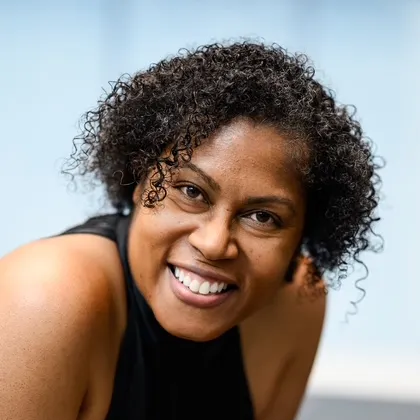
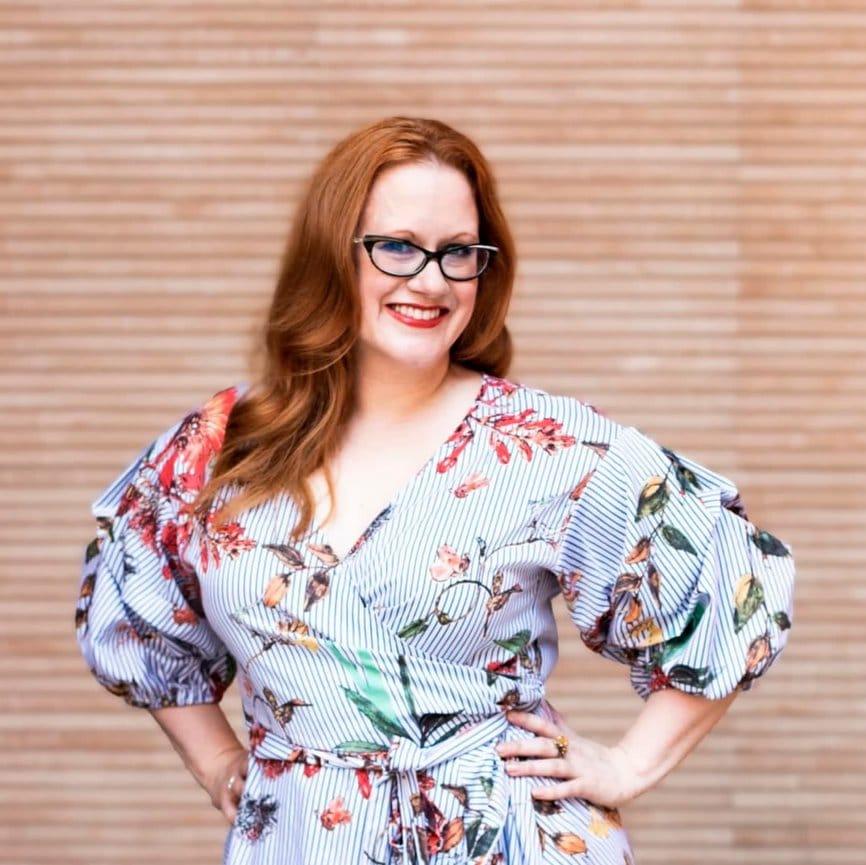
Episode Transcript
[00:00:00] Speaker A: This was made by humans.
[00:00:05] Speaker B: Welcome to Austin Community Conversations, a podcast featuring discussions about the interests, backgrounds and projects animating the members of a vibrant college community.
The views, thoughts and opinions expressed are the speaker's own and do not represent the views, thoughts and opinions of Austin Community College. The material and information presented here is for general information purposes only.
The Austin Community College Community College name and all forms and abbreviations are the property of its owner and its use does not imply endorsement of or opposition to any specific organization, product or service.
Foreign
[00:01:07] Speaker C: I'm Tonio Ramirez, Dean of the School of Humanities and Communications at Austin Community College. On July 31, our school will kick off a new speaker series, All Too Human, aimed at introducing humanistic inquiry as well as the academic disciplines. Keeping it alive at acc.
Each event in this series will feature ACC faculty discussing ways of seeing the humanities in real time by focusing on topics and experiences that characterize the moment we live in. Events will be free and open to the public, they'll have an interactive focus and they'll provide an excellent opportunity to be introduced to the fields of literature, philosophy, communication studies, world languages, and many more.
So whether you're curious about what exactly it is that a philosopher or a linguist or a contemporary poet does, or you're simply interested in grabbing a free bite to eat and having a provocative conversation, please consider this a warm invitation.
Our July 31 event will take place from 6 to 8pm at ACC's Highland Campus with further info in this show's episode notes. Our speaker and today's podcast guest is Elle Harder. Elle teaches courses in English and the humanities at ACC and will speak on the cultural significance of the recent films, Obsession and Backrooms.
[00:02:20] Speaker A: Here we talk about how her own
[00:02:22] Speaker C: background and approach to the humanities align particularly well with this topic.
Let's dive in.
[00:02:32] Speaker A: AL Harder, welcome to the conversation.
[00:02:34] Speaker D: I'm happy to be here.
[00:02:35] Speaker A: In addition to your work, as your work in academia and as an instructor, you are a filmmaker and if I understand correctly, you have worked primarily in short form film.
[00:02:49] Speaker D: Yes, screenwriting is more my area of specialty, so I pretty much do a feature a year at this point.
I did some TV pilots and stuff like that, but a writer's room was never really something I saw myself being able to achieve.
The work hours is 80 hours a
[00:03:12] Speaker A: week
[00:03:14] Speaker D: and I also like writing horror and horror lends itself, in my opinion, to features more than anything and so focusing on folklore. I love Catholic Gothic horror.
Funny that, but for me horror is the most sustainable genre. You know, we still watch horror movies that are 60 years old, more than any other genre. And it taps into something that makes us so human, which is fear.
And it's kind of like being a, you know, an adrenaline junkie from your couch. And it gets your heart rate up, but you have the safety of it. But people have done things in horror as a genre that they haven't really been able to do in others, in my opinion.
And in terms of rewatchability and just everything about it transcends other genres, in my opinion.
[00:04:12] Speaker A: Okay, so as a screenwriter, when you are maybe distinguishing something that's going to turn into a feature versus a short work, how do you make that discernment? Is that something you kind of know early on or you realize midway through a project, this idea is actually going to be something that is better suited to a shorter form or something like that?
[00:04:36] Speaker D: Well, sometimes it evolves organically and it's like, oh, I don't know if this has enough meat on its bones to be a feature, but I think it could be a really great short.
Other times it's, are we making a project that could basically be a concept piece for a feature?
And what about the feature? Do we want to make sure it's emphasized in the short, too?
Because that is how a lot of filmmakers get their start.
And short films are so hard to do well. And the time that we are given to tell a story and to get a point of view across is. Is slimmer and slimmer. I mean, it used to be grab them in the first five pages. Now it's grab them by the first sentence. You know, it is. And we're all like that. Our attention spans have dwindled and now it's like, you gotta have everything tight, and it needs to be the most successful shorts are going to be under 10 minutes, but not under five. And so. And basically the idea is, if you can tell that concrete of a story and have that strong of a point of view in five minutes, what can you do with two hours?
[00:05:42] Speaker A: Sure.
[00:05:43] Speaker D: Or 87 minutes?
[00:05:45] Speaker A: Yes.
[00:05:45] Speaker B: Yeah.
[00:05:45] Speaker A: Yeah. Well, there's a really interesting, and I don't know how long it will last, a really interesting moment we're in right now where it seems like short form horror film is receiving attention in a way that it hasn't, let's say, in the mainstream in the last 15 years. Right. So people have been making horror shorts forever.
It's long been, as you mentioned, a vehicle for maybe getting the opportunity to move toward making a feature.
But with the massive success of Obsession and the Back Rooms in one, one month, we have two filmmakers, both very young, both who have kind of a long history of making short films that have been distributed primarily on platforms like YouTube.
Yeah.
[00:06:29] Speaker D: Back Rooms has 85 million views.
[00:06:31] Speaker A: Yeah, right.
And, and made those initial shorts made for nothing. Right. This is just a passion project of the, of the filmmaker now bringing in, you know, on scale, any like record breaking sums of money. So it won't, it won't shock me to see, you know, in the way that Hollywood likes to do, like people just going mining for whatever gold might be in those hills.
[00:06:56] Speaker D: Right.
[00:06:58] Speaker A: How in terms of just distribution, the model of how you get people to see a short film, it's probably really different now than it would have been even 15 years ago, five years ago.
[00:07:12] Speaker D: And the problem with Hollywood is it hates change and it moves very slowly. So a lot of the institutions are failing and they're grappling.
And I think one of the main differences why short form is making a huge comeback is because of the younger generation. They don't want to watch movies, they don't want to watch long form unless you really make a point to show them something and tie them down and make them watch it.
And then they love it and they're like, this is amazing. And I'm like, yeah, it's movies, it's great.
But with YouTube especially, that is where the majority of, honestly, the majority of adults I know, that's where they're getting most of their content is short form from YouTube, whatever the algorithm is showing them, for better or for worse.
So I think the short, short form again is like, can you tell a whole narrative or have an immersive experience in that way? Because I feel like Back Rooms was more immersive because it kind of felt like a video game a bit. Because it was first person.
[00:08:19] Speaker A: Sure.
[00:08:21] Speaker D: And there was no real story, there was no real plot, but it was, you know, that liminal space thing that we, you know, that's, it's also very topical right now.
[00:08:32] Speaker A: Yes.
[00:08:33] Speaker D: So I think it's, I think part of the horror genre too is there is longevity for some, but there's also some that just really tap into what is the zeitgeist. What is right now, what is something that we are, you know, obsessing about.
[00:08:46] Speaker A: Yeah.
[00:08:47] Speaker D: So I feel like Backroom is an example of that.
Whereas Obsession, I feel like, is more of a, you know, Gen Z type of perspective. And it's the combining of horror and comedy in a way that is that I'm seeing again and again in the past year in all forms of TV Film like Widow's Bay. Have you?
[00:09:10] Speaker A: I have. I am watching Widows Bay.
[00:09:12] Speaker D: Okay. I've already rewatched it. I'm obsessed.
[00:09:13] Speaker A: Yeah. I'm enjoying it quite thoroughly.
[00:09:15] Speaker D: And, you know, shows like the Burrows, the Burbs, this horror comedy of using comedy a lot of times as the jump scare is becoming more of a thing.
But it's this weird middle ground that filmmakers and writers are playing with that. That I think is even back to Companion of last year.
[00:09:38] Speaker A: Ye.
[00:09:40] Speaker D: But they usually. Horror and comedy used to be more like Shaun of the Dead, you know, or Scream, which are two very different, you know, ends of the same comedy horror perspective. Because with. Because structurally, they're very different. So Shaun of the Dead is a comedy with horror elements because you keep the group together as long as possible because that's where your comedy is coming from. Whereas Scream is a slasher and it's structured as a horror. So you knock someone off every 12 minutes.
[00:10:07] Speaker A: Yeah.
[00:10:08] Speaker D: So it's very different. But now with shows like Widow's Bay or Obsession, they're throwing that kind of out the window and really playing with expectations of where humor and horror kind of go hand in hand.
[00:10:23] Speaker A: Yeah.
[00:10:24] Speaker D: So the traditional horror movie I just watched, Hokum and I. He did Oddity and Caveat as well. Have you watched?
[00:10:34] Speaker A: I've seen all three of these, yeah.
[00:10:35] Speaker D: Okay, so Hokum scared the crap out of.
[00:10:37] Speaker A: Very scary film. Yeah.
[00:10:38] Speaker D: Because he lingers. He will torture you, just torture his audience and will not let you leave.
And. And while there is some comedy moments throughout his work, he's probably my favorite contemporary, traditional horror, like, filmmaker right now.
[00:10:57] Speaker A: I can see that if you. If you fancy, like, the gothic mode.
[00:11:02] Speaker D: I loved Oddity. I know a lot of people didn't,
[00:11:04] Speaker A: but I know that just the long scenes of the wooden mannequin just sitting there, like, on edge, like.
[00:11:09] Speaker D: And he also does this thing with a lot of his creatures where they're almost funny, they're grotesque, but they're not. You don't look at that golem and you're immediately, like, terrified, you know, But. But if you see the corner of your eye maybe move a little bit, and then you're like, oh, I hate this. Sure.
[00:11:28] Speaker A: Yeah. No, but. So his.
His last name's McCarthy. I forget his first name, I think.
[00:11:35] Speaker B: Damian.
[00:11:35] Speaker A: Damian McCarthy. Right.
[00:11:36] Speaker D: I messaged him on Instagram.
[00:11:37] Speaker A: Oh, okay.
[00:11:38] Speaker B: That's cool.
[00:11:39] Speaker A: So he's invoking themes and imagery that strikes me as very traditional. I can see a very clear through line back to even the universal pictures of Frankenstein when I look at something like Obsession. What strikes me as interesting, as you've said, is the way that it's blending horror and comedy in some really effective ways. But, but it tells me something about what the Gen Z filmmakers find funny.
So if I were to look at, I don't know, John Landis, American Werewolf in London, 1983 or whatever that is, Right? That's a horror comedy as well. But the comedic elements are. They're laughing at something completely different from what Sam Raimi's laughing at a few years later. From what?
From what you see being laughed at in Scream. And I have noticed when I talk about the film with my 16 year old son and when I talk to some of my colleagues at acc, he found it funnier than a lot of my colleagues.
[00:12:53] Speaker D: I thought it was hilarious.
[00:12:54] Speaker A: I did too.
But I wonder about that. Is there a sense in which maybe I'm too old to be in on part of the joke? I don't know.
[00:13:02] Speaker D: I mean, possibly.
And I think that goes with generational differences, but I think that also goes with cultural differences too. Like, I love the Blackening. Will I pretend that I got every single joke? No, like, because I also wasn't the main audience for that movie, but it was still like I, I thought it was a great time.
But with obsession 2 like they. Because also horror is essentially about catharsis. And just like drama is, you're supposed to cry, you know, in horror you're, you're supposed to scream or have kind of cathartic moment. And so I think that they've just, maybe there is some kind of cynicism with this generation that they want to find the comedy and even in the fear because it gives them just an additional level of a breathing room.
I could be off with that. But for me, because I saw it in the theater, it was packed and we all were laughing and I think before and the things. I am one of those people that when I'm truly SC during horror movies, I'm a total pansy. But I also laugh when I'm uncomfortable. So those things combined with me in a theater. People either love seeing the movies with me or they, they find it very upsetting because if I see a gruesome death, I just start laughing. So in that way I feel like I bond with the younger generation because, I mean, when she, an obsession, when she was in the corner and in that dark room and, and then just did the awkward dance moves, I just thought that was the funniest and, and weirdest and scariest thing I've ever like. I loved it. So I love this idea of.
Of breaking sometimes what we think is tradition, of, you know, these are the things that make a horror movie a horror movie.
And I like that he, especially how young he is, was able to break through that. And you know, I saw his short film, the Chair.
[00:15:01] Speaker A: Excellent short. Yeah.
[00:15:02] Speaker D: It's also 24 minutes long. It's long, but it's good. And you can definitely see that humor, but also this kind of questioning reality.
I think that's another thing with Gen Z. Like everything's online, everything's a fake, everything is. We never know really know what is real anymore.
And I think for them to embrace the fear of that is to be creative with it.
[00:15:29] Speaker A: Sure.
So parallel to this point, you know, I am suddenly, you know, exposed to the idea that there's a world of short form horror out there. It's really exciting. I go on YouTube and I could either kind of farm my attention out to the algorithm.
[00:15:49] Speaker D: Yeah, right.
[00:15:50] Speaker A: Or I could look to a platform. I think Alter is a big one.
[00:15:54] Speaker D: Right.
[00:15:55] Speaker A: They curate a lot of films. Right.
[00:15:57] Speaker C: Or I could.
[00:15:58] Speaker A: I could try to like scour the pile for things that will interest me, which is.
It's harder to do that, I imagine, than it would have been like back in the early 80s when I would like be trading VHS tapes with somebody or something.
What advice might you give to somebody who's excited about this but doesn't know really where to look for what else would be of interest?
[00:16:19] Speaker D: Especially in Austin, we have so many great film festivals and almost all of them have short blocks.
And you have the big ones like Austin Film Festival and South by Southwest, Fantastic Fest.
Now that one is very hard to get into in general because badges are so expensive.
But the short blocks that you can go to and buy individual tickets for are so well curated.
But if horror isn't, you know, and it can be part of it. But there was just a great film festival this past weekend called Bath, which is the Black Auteur Film Festival. And that's just once a year and right after Juneteenth.
But there's a lot of local filmmakers in town and they put on these little small events that you can, you know, you just have to be more into the community and just do a little bit of research and find out where to go.
But these short blocks are there and you all surround other people who also love short films.
[00:17:15] Speaker A: Sure.
Which is a totally different experience from watching it on your phone.
[00:17:19] Speaker D: Oh, definitely two in the morning or something like this. And there's still plenty of filmmakers, local filmmakers who are making short films and. And they go to film festivals all over the country. One of my favorite horror ones is in Columbus, Ohio, of all places. It's called Nightmares.
And not only have they cultivated, you know, they always choose great programming, but Jason Tosteven, who is the organizer, has really created like a family dynamic. So you go there and I try to go up there every year because it's just so much fun. And sure they like my scripts, so I'm usually a finalist, but the way that they just. Everyone's there to support each other. It's not a competition. It's not about who's going to win a trophy and who's not going to win a trophy. It's really about collaboration and finding other people that around the world that you might want to collaborate with. And it's a horror family.
So I think that like the mid range of film festivals, and again, I love AFF and South by and Fantastic Fest, but like the mid range, like there's a one in Utah called Film Quest and it's in Provo, which is Mormons. You know, it's all Mormons expect to
[00:18:23] Speaker A: go and find a horror festival there.
[00:18:25] Speaker D: But it's so much fun. And it is basically just kind of like how Austin used to be, which, you know, where are all the weirdos going to go in Texas? They all went to, you know, to Austin. Well, Provo is kind of like that for that one week because they have this genre film fest and everyone in Utah goes there, sends on Provo. Yeah, it's really funny. So is that mid range of film festivals that you can find some really unique and interesting talent. Because with the bigger festivals, you know, if you have a named actor, an actress and you're short, you usually get programmed. It may not necessarily mean that it's that good. It just means that you have name recognition.
[00:19:01] Speaker A: Yeah, sure.
[00:19:01] Speaker D: But the middle, the mid tier, you actually get some like really weird, cool stuff being made.
[00:19:08] Speaker A: Yeah.
[00:19:08] Speaker D: So you have to do a little bit of research, a little bit of work, but it's definitely worth it.
[00:19:12] Speaker A: Yeah, no, it sounds like it. I mean, and the fact that there is a world that is available and accessible if you're willing to put in the work, is exciting to know.
Sometimes I feel like the readily available and overwhelming amount of content that is available on a phone, it can give rise to this illusion that everything is there. When that's not true, there's actually a whole lot of stuff that isn't in your phone.
And that's worth going and seeking out as well.
[00:19:41] Speaker D: I mean, one thing I'm personally trying to get away from is when I'm watching content that I perceive to be really worth it is to really put my phone away.
Because I think that we've gotten into multi screens and because of that. One of the reasons why I love Widow's Bay is because if you are on your phone, you miss half of it and they make you watch it.
[00:20:02] Speaker A: It's quick in that way. Yeah.
[00:20:03] Speaker D: And it's great and it's brilliant.
And I just think that hopefully we'll get away from that. But that takes a lot of self discipline, I think because of dopamine and everything else. And we're always afraid of missing out on something. And that elusive something isn't.
It's junk food. It doesn't make us feel that we've learned anything or gained anything.
Which is why I still think going to the theaters is so important.
[00:20:29] Speaker A: I agree.
[00:20:30] Speaker D: Because it's a communal experience, but immersed, like you have to like.
But I also think that with the rise of AI immersive, theater is probably going to be a thing.
[00:20:44] Speaker A: Yeah, it is. Certainly it's not quite clear to me what it's going to look like.
[00:20:49] Speaker D: Right.
[00:20:50] Speaker A: There will be things that we will be able to do that we could not do before.
[00:20:54] Speaker D: Right. And horror is interesting because, you know, I feel like 90% of horror sound design. So that's why horror and theater can sometimes not have a really good relationship.
But I feel like with technology, I think that can change.
And I think to have something like, have you ever been to the Kafka Museum in Prague?
[00:21:17] Speaker A: I have not.
[00:21:18] Speaker D: So what's really great is this kind of messes with your brain while you're in the museum. So for example, it's kind of tilted. And so you're like, why? Why is this happening? And you, and you go down this tunnel and when I went down it, it was red. And I was like, oh, that's terrifying. And then I go outside and I talk to other tourists and they're like, it was white when I went in.
[00:21:38] Speaker A: Same with you.
[00:21:38] Speaker D: Yes. Because it's Kafka. Like, it makes you question your reality. And I am like, I love that experience so much. And I would love to eventually curate something that is immersive in real life that can have that kind of, you know, same reaction whether where you were in the theater can dictate what your experience was.
[00:22:00] Speaker A: Sure.
[00:22:01] Speaker D: And makes you want to go back again.
And there have been some. I mean, Danny Boyle's Frankenstein was pretty cool.
[00:22:09] Speaker A: I think I've seen that, actually.
[00:22:11] Speaker D: I don't know if you can see the whole thing online, but definitely look it up because it was Benedict Cumberbatch and Johnny Miller and they switched roles halfway.
So they both got to play the monster and they both got to play the doctor. And it created a level empathy for the other.
[00:22:30] Speaker A: Interesting.
[00:22:31] Speaker D: But the set design was beautiful and chaotic and gorgeous and terrifying.
But even him playing with those roles being swapped, I think really added another level of why we have such empathy for the creature.
[00:22:48] Speaker A: Okay, yeah, that sounds wonderful. Those are all artists that I'm very fond about to check that out, the last set of questions. So I'm a big fan of film and in particular of the horror genre as a screenwriter. Right.
When you are trying to commit to the page emotion, a scare, let's say that, you know, is ultimately going to hinge very heavily on directorial choices.
How do you like. How do you try and guide, as
[00:23:25] Speaker C: you're handing that off.
[00:23:26] Speaker A: Right.
[00:23:26] Speaker C: How do you try and guide toward
[00:23:27] Speaker A: the actual effect that you want?
[00:23:29] Speaker D: So that is directing without directing. And some of it's more simple than others. So you don't say close up of Wedding Ring. You would say. You would describe the ring in detail. So they would have. And if it's important to the story, they would have to show the close
[00:23:45] Speaker C: up of the ring.
[00:23:47] Speaker D: Things like that. When it comes to scares, because I'm such a scaredy cat, I just go further than what I'm comfortable with.
[00:23:54] Speaker A: Okay.
[00:23:55] Speaker D: And one of my favorite moments was in grad school when I had a scene and a cohort sat next to me and he just stared at me. And I was like, what? He's like, I read your scene. And I was like, it's okay. And he's like, I don't.
[00:24:10] Speaker A: I don't know. Like, are you all right?
[00:24:15] Speaker D: Which I think is the best compliment you can get as a horror writer.
But I think it's just like with McCarthy, with him, you know, settling and I haven't read his scripts, which that is. My next thing is I want to read Hokum and see how he put, like, what is his time ratio?
Because usually one minute equals one page.
But the way that he holds on things, I'll be very curious.
It probably is pretty lean. But also, he's the director writer, and a lot of people want to be writer directors. I'm actually the opposite. Like, I like directing, but I don't really like being on set.
I think what's great about filmmaking is to Write something and give it to the next person because then they give it to the editor. So it really is like three, three entities making something. And that in utilizing the talents of everyone involved, especially even the cinematographer and the actors, like that's what's so great about it is.
Now that also means everything can go wrong if one of those things doesn't work out.
But in terms of the blueprint, I think that, you know, all goes back down to character. The most successful scripts, movies are always about how do we relate to a character.
Even when we think we don't.
Like Walter White.
Yeah, we hate his wife anyways, that's a whole other thing.
But connecting to them. And that's where the fear comes from because, you know, it's always about what happens if they don't get their goal. And in horror it's usually pretty simple. It's like, well, they're gonna die. Yeah, but it's that.
And for me it's always looking for something new.
Like, that's why I loved Obsession, because I felt like I hadn't seen that tone before. Felt like I hadn't seen that perspective before.
Now with Hokum, that's more traditional and I loved it.
Do I think that it's breaking the mold? Not necessarily, but I think it's brilliant. I think it's great.
But for me as a viewer, I'm always searching for a point of view.
Especially I love filmmakers that aren't necessarily coming from privilege, which is still such a hurdle to the film industry.
The reason I became a writer was because I couldn't afford a camera. I could go to the library, I could write on a computer.
But unless you're willing, unless you're willing to go to la, not work for three years and take unpaid internships, then you're not going to make it.
And how many people can afford to do that?
[00:26:50] Speaker A: Sure.
[00:26:51] Speaker D: So there's still. Because people would say it's who you know. Well, it's because of that privilege, that economic privilege.
So the thing I love about YouTube and it is it is cheaper to make things now than it was 30 years ago.
That is the case.
But still, to get a certain level of quality, you need to have money. And that's still unfortunately a major.
[00:27:17] Speaker A: Yeah, it's a big barrier.
[00:27:18] Speaker D: It really is.
[00:27:19] Speaker A: Yeah. Tying the film world back to the experiences that ACC students might have in their courses. You mentioned quite a way back that, that you are interested in low brow culture and how that can be an important vehicle for engaging with culture more broadly.
I think maybe It's a little bit different in the current moment, but horror, you know, is regularly kind of, like, sidelined. Like, the.
[00:27:50] Speaker D: No one takes it seriously.
[00:27:51] Speaker A: The lowest of the low brow.
Although we are in this weird era of, like, elevated horror.
[00:27:56] Speaker B: Right.
[00:27:57] Speaker A: But where.
Where else do you see opportunities for students to engage in meaningful ways with low culture, or rather culture that they might be encouraged not to take seriously, if that makes sense.
[00:28:21] Speaker D: It kind of goes back to the embarrassment thing.
And I do think this generation has so much anxiety, and I'm also prone to anxieties, so I get it.
But in a world where everything is recorded, everything can be put online, there is this reluctance to be passionate and reluctance to be engaged and be excited and be nerdy. And we've kind of backslid on the nerdy thing a little bit. Like, we. We peaked, and then now it's not great again.
And so I think it's cultivating, whether it be in your home or in your friendships or in a classroom, it's cultivating this comfortability of being silly and of being a nerd and being passionate and encouraging other people to be just as passionate as you.
And the more random and weird, the better.
And the second. I feel like most people, when they get one other person who lights up when they talk to the thing that lights them up.
[00:29:30] Speaker A: Sure.
[00:29:31] Speaker D: The confidence that comes from that.
Yeah. It's just great. And I think that.
I think extending that to all parts of our life, and. And it's okay to sometimes be the one that the chief stands alone, you know, like. And be like, no, I'm excited about this. And everyone's like, really? I'm like, I am. And that's okay.
[00:29:49] Speaker A: You know, the best stuff comes from that.
[00:29:50] Speaker D: You can make fun of me. That's cool.
You know, like, I.
Oh, this is not the. It's not a great story, but one of my students this. This past semester asked me what I would do if I was being cyberbullied, because they were being cyberbullied.
And. And that broke my heart.
And they're like, what would you do?
They were like, you usually are really quick on. On things. And I was like, the thing is about bullies.
They're some of the most miserable people on the planet. And I was like, and the fact that they're taking time out of their life to be cruel, you really need to feel sorry for them.
And I know how hard it is to practice empathy in that moment. I was like, but just realize there's a lot going on with them that makes them this miserable that you don't have to engage.
And it seemed to actually help them a lot, and they just seemed brighter and started to express themselves a little bit more in class.
[00:30:57] Speaker A: That's wonderful.
[00:30:58] Speaker D: And I just think it's. Let's all be nerds together.
[00:31:01] Speaker A: Yeah.
[00:31:02] Speaker D: Yeah.
[00:31:02] Speaker A: No, I like that. Yeah. There's plenty of room for nerdom, especially in our disciplines. Yeah, that's absolutely true. All right, well, thank you very much for taking the time to talk.
[00:31:11] Speaker D: Yeah, it was fun.
[00:31:12] Speaker A: Yeah, it was. And I look forward to the talk that you'll be curating for us at the upcoming All Too Human speaker series.
[00:31:22] Speaker D: Excellent.