Episode Transcript
[00:00:00] Speaker A: This was made by humans.
[00:00:05] Speaker B: Welcome to Austin Community Conversations, a podcast featuring discussions about the interests, backgrounds, and projects animating the members of a vibrant college community.
The views, thoughts and opinions expressed are the speaker's own and do not represent the views, thoughts and opinions of Austin Community College. The material and information presented here is for general information purposes only.
The Austin Community College. Each community college name and all forms and abbreviations are the property of its owner and its use does not imply endorsement of or opposition to any specific organization, product or service.
[00:01:12] Speaker C: Welcome to the conversation. I'm Tonio Ramirez.
Higher education offers students an opportunity to discover, cultivate, and follow a deep sense of curiosity.
Many of those who pursue careers at community colleges do so precisely because of the impact that this discovery, cultivation and pursuit has had on their own lives, and because of a drive to ensure that this opportunity is made available as widely as possible.
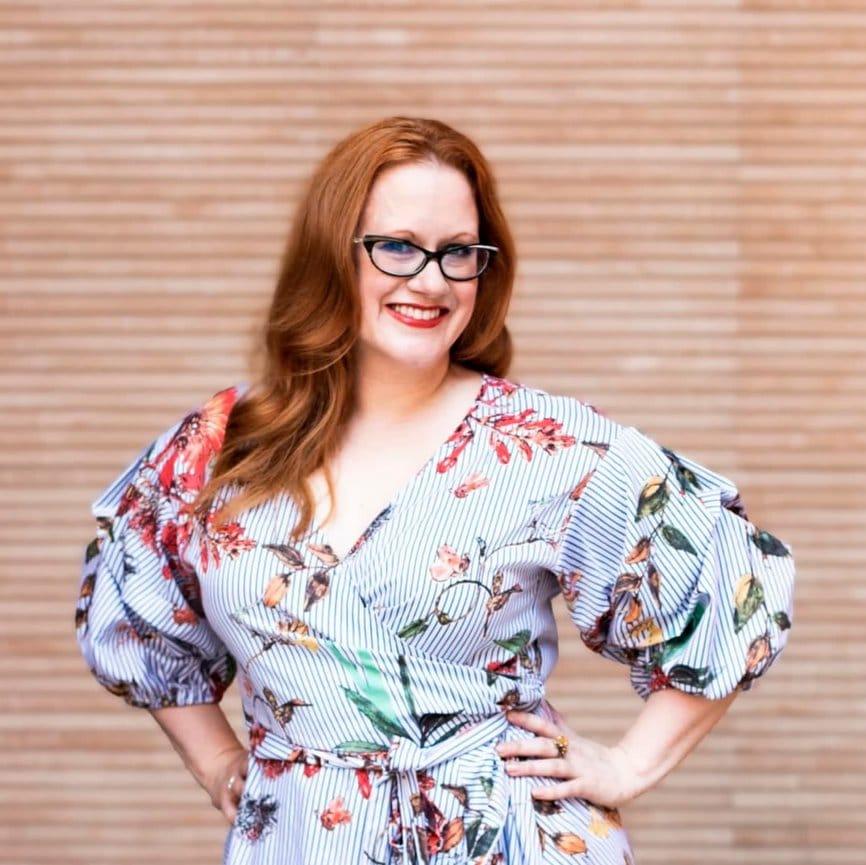
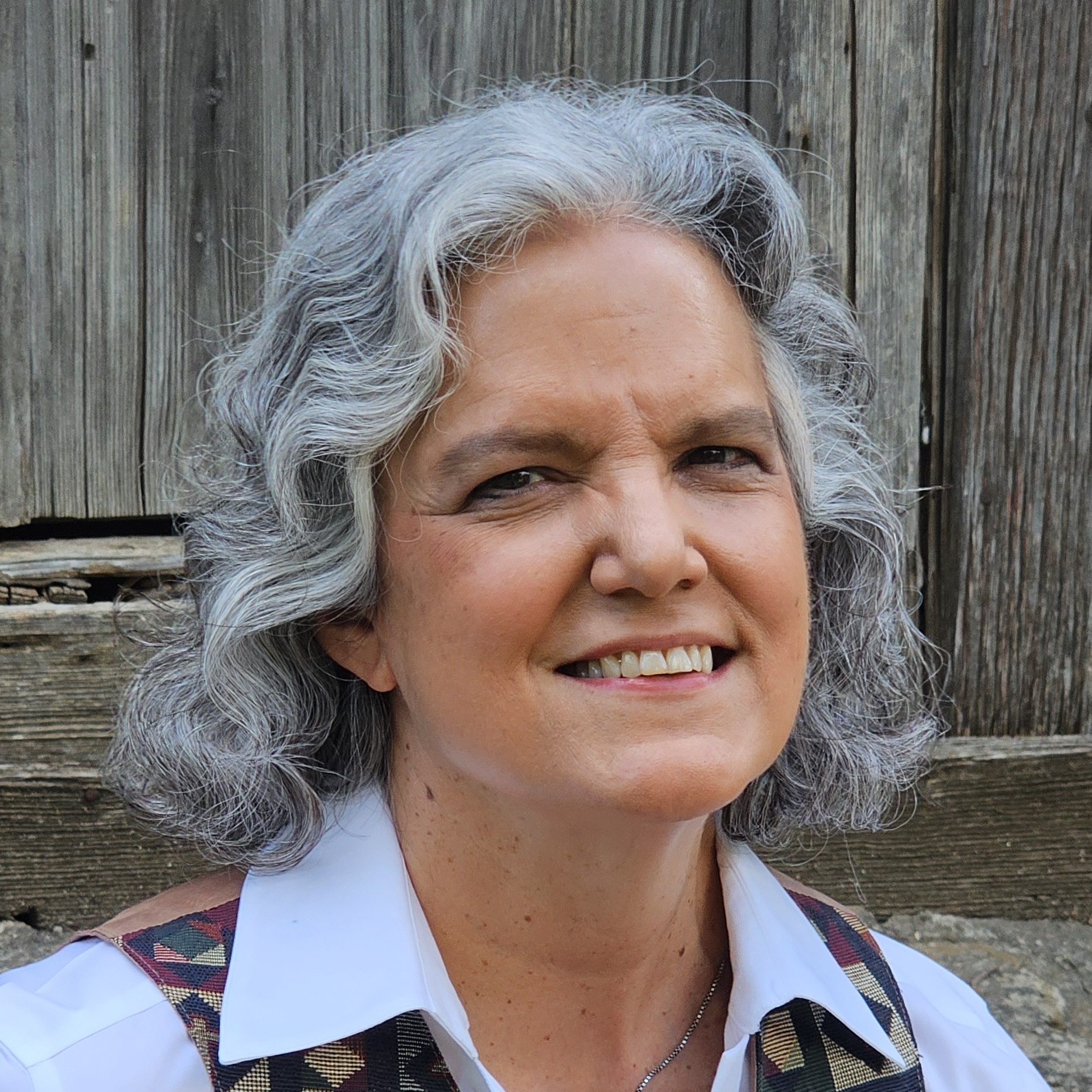
My guest today is Dr. Melissa Langley Begert, Director of High School Program Academic Success at Austin Community College. While she works to ensure that ACC's scope and reach extends to a growing population of dual enrolled students taking college courses while still enrolled in High School, Dr. Beger remains committed to her own curiosity and work as an historian. She has recently published a book entitled the Family behind the Girl Scouts of Lives of the Kinsey Gordon Clan. As we discuss the book and its origins, Dr. Beeger weaves in a story of her own student journey and leaves us with a compelling set of connections. The power of a community of support and of an understanding of a history of that community infuses the story of Girl Scouts of America founder Juliet Gordon Law, but it also infuses Dr. Begert's own story and the stories of thousands of students currently enrolled at acc.
Let's dive in.
[00:02:31] Speaker A: I'm Melissa Langley Begert. Welcome to the conversation.
[00:02:34] Speaker D: Hi. Thank you for having me.
[00:02:35] Speaker A: So it's an exciting time. It sounds like you're preparing to release a book, and I imagine that a book of this scope is going to be something you've been working on for a while.
[00:02:47] Speaker D: Yes, actually, it began with a paper I wrote when I was at Vanderbilt Divinity School working on my master's degree, and so it's actually kind of been in the works for about 35 years.
[00:02:59] Speaker A: No kidding. Okay. Well, that must feel pretty good to see it come to fruition.
[00:03:04] Speaker D: Yes, absolutely. Yeah.
[00:03:05] Speaker A: Well, that's exciting. Well, we'll get a chance to get to your current work at acc, but I thought we'd just dive in and talk about the book and the topics itself.
So in the preface, you indicate that probably the most famous member of this family, the Kinsey Gordon clan, is Juliet Gordon Lowe, who's probably best known as the founder of the Girl Scouts of America.
And that in the preface, you mentioned that she was actually one of the focuses of your doctoral work. Is that correct?
[00:03:31] Speaker D: Correct. Yes.
[00:03:32] Speaker A: Okay. So I thought that since that achievement is one that I imagine and a lot of people are familiar with, at least, you know, through the interactions that folks have with Girl Scouts, it might serve as an approachable entry point into the story you're trying to tell in the book. So while your book spans a lot of time before her, maybe we could begin with Juliet Gordon Lowe. What. What drew your attention to her as an object of study?
[00:04:00] Speaker D: It kind of began with the fact that I was a Girl Scout.
[00:04:02] Speaker A: Okay.
[00:04:03] Speaker D: So the impetus for this is, you know, I.
I started in Girl Scouts when I was in the fourth grade and stayed in it all the way up through high school. Got my gold award.
And I grew up in a really small town in Arkansas where there weren't a lot of opportunities.
But through Girl Scouts, I formed a really tight knit group of young women.
And we all kind of encouraged each other.
We all went on to go to college and have done a lot of interesting things with our lives and everything. And so when I got to grad school and when I was at Vanderbilt, I was in a unique program in the divinity school in ethics and history. So I would take half of my courses in ethics or philosophy and the other half in history, and they were paired.
So one semester I was taking a graduate course in women's history. The same time I was studying things like feminist theology and ethics and those things and the melding of the two. And I was in the women's history area. I was working with a woman named Elizabeth Israel Perry.
And she got me really thinking about what was it about the Girl Scouts that particularly influenced this group of girls that I grew up with, and especially even in my mom, because my mom was somebody who only got involved in Girl Scouts because of me. And she became our den leader.
You know, she was our leader throughout Scouts the whole time I was there. And I just saw the growth in her. I mean, she went from somebody who, like, never even really camped out to somebody who actually taught survival skills to other women.
I was really fascinated by that. And so Dr. Perry encouraged me to run with that. And so I wrote a paper that year where I interviewed a lot of women, including the women I grew up with. And my mom and I also studied some of the Foundational elements of Girl Scouting, which was really radical when it first was established in 1912. I mean, the kinds of things that Juliet Lowe had young women doing, learning survival skills, playing sports, all of that was so antithetical to the Victorian world she had been brought up in.
[00:06:19] Speaker A: I can imagine.
[00:06:21] Speaker D: And she was also training other women, because in order to teach these skills, she was recruiting a lot of progressive women who were women who were well educated, but also came from very privileged backgrounds where they had often been sheltered from these activities. So she developed this whole curriculum for training women as well as the girls. And so I really became fascinated by just that whole philosophy behind that and the impact that it has on women, even up until today.
And so that was kind of like the kernel of it. And so.
And then I kind of took a break from school for a little bit. And so when I started working on my PhD at UT, I knew from the get go this is what I wanted to write my dissertation about. And so my dissertation focused on how Juliet Lowe came to develop this organization and how radical it was and how much she patterned it actually after the British Boy Scouts, even more so than the Girl Guides or the American Boy Scout movement. And in doing that, I did a lot of research on her background.
She is not someone who would have been predicted to have done something really great with her life. She had a lot of challenges.
She was very sheltered in some ways, growing up with her family, but she also had a lot of physical challenges, went through a really bad marriage.
That kind of enlightened her to the fact that you may prepare young women to live this perfect life as a mother and upper class wife, but if she marries a cad and cannot have children, like what happened with her, life may come out very differently.
So when she embraced the Scouting ideal of be prepared, what she was preparing young women for was to be able to face anything life throws at you.
And so the dissertation focused on that.
When I finished my PhD, there was some interest in actually publishing it at the time, but I was a little burned out on the topic. I need to take a break from it.
[00:08:25] Speaker B: That will happen.
[00:08:26] Speaker D: Yes. And I had some personal things that I wanted to do in my life, and I did some different things with my career and everything, but I continued to come back to the research. So I never gave up researching it, but I just looked at different pieces and parts, and in the meantime, had a colleague who did a biography of Juliet Lo that came out at the hundredth anniversary of the founding of Girl Scouts. There's more of a straightforward Biography. I was like, hey, somebody's done that. But in the course of all the study I'd done, one of the questions that kept coming back to me was, what gave her the strength to do this, to be able to buck convention and to meet this head on and embrace this thing that impacted so many young women. And a lot of it came down to the unconditional support she got from her family.
And that fascinated me too, because especially the more I delved into her family and the history of her family.
She had men in her family, great grandparents and everything, who were leaders and shakers of their societies. Her great grandfather on her mother's side was a founder of Chicago. Her great grandfather on her father's side was a leader in Georgia. The two families actually fought against each other in the Civil War. War. She was born on the cusp of the Civil War. And so there's just all this drama and everything. And yet she was raised with this very tight knit group of siblings and her parents who supported her no matter what.
And it was fascinating to me, both from an ethical standpoint and a historical standpoint of how did they get there?
And so in the course of doing that, that's one of the things I looked at and did a lot of side research on all of her different relatives and going the background. It's really interesting to me in that she came from a long line of men who had served in various political roles and as business leaders. And in their day they were very famous and they've now been forgotten by the general public. And she's the one who created this thing that now lives on, which is very ironic. And so it just kind of continued to morph. And over the years, you know, I fleshed it out and was doing different papers at different conferences. So I never stopped researching and I never stopped writing.
And then just a confluence of things happened to come together a couple of years ago that presented an opportunity to finally finish the book. And so I did. Now it's going to be coming out next month.
[00:11:00] Speaker A: Outstanding. Yeah, well, so I know that I'm not a historian myself, but I have to imagine that as a historian, you found something of a treasure here in that you have a long family lineage that's well documented.
So letters and the fact that many of them were prevalent figures who I imagine much have been written about.
What was it like having that?
Maybe playground's the wrong word to use here, but that kind of wealth of resources to be able to actually guide
[00:11:32] Speaker D: the story you tell here, it made it easier in Some ways, yeah. One of the things that has really driven a lot of my research on the family and even the way that I wrote the story, is that the family kept so many documents, and her mother, particularly Juliet Lo's mother, became kind of like the family historian in compiling and maintaining all the family records. And these people also wrote letters to each other constantly. They journaled, and they kept every scrap of paper.
And then, because Juliet Lo became so famous, her siblings and her nieces and nephews realized somebody might be interested in this. And so they donated this huge trove of all these documents they had to two collections. They're primarily at the Georgia Historical Society in Georgia and Savannah, and the second one is at the University of North Carolina at Chapel Hill. And, I mean, literally, we're talking tens of thousands of documents, and it's overwhelming, but it's also wonderful because it gives you their voice.
[00:12:38] Speaker A: Sure.
[00:12:39] Speaker D: And you can read these letters. People are writing between each other, and it's like a dialogue. I mean, it is like they were on the telephone with each other, and yet they're writing, you know, across an ocean from each other, and they're talking about family gossip, and you get a feel for their personalities and the interpersonal dynamics and everything. And at a certain point, I kind of fell in love with these people. And I like, you know, these are just great people. Somebody needs to tell this story.
[00:13:05] Speaker A: And.
[00:13:06] Speaker D: And I get excited about it. And, you know, it's interesting, because when I teach US History, and I haven't actually been in the classroom for several years, but when I used to teach US History courses, when I would get to the progressive era, I would talk about Julia Lowe, because she did recruit so many women from progressive movements to help to push this. I would use her stories, kind of an example. The changing moors of women.
Just a few weeks ago, I had dinner with a former student of mine. Have not taught her for 14 years.
And. And she came up. She says, I will never forget in your class, you talking about Juliette Lowe and what you told me about her and how fascinating it is. And so she. The student was, like, so excited this book was coming out and everything. But I thought, wow, if that is something that sticks with a student so many years later, because that's what we all want as instructors.
There's something that's resonating with this story.
And so that. And then just, you know, the further back I went, of course, it gets harder the further back you go. There's not as many personal documents. There's, you know, there's More public documents, but not as many personal documents. So that took more digging, but the documents were there.
The other thing that I did very intentionally in this book was I tried to flesh out the personalities of the side people in the story, like, for example, Juliet Lowe's Southern family that fought for the Confederacy. They owned slaves.
And so giving voice to the enslaved workers who were in that household and trying to identify them by name, trying to discover something about them, I was able to glean some of that information and be able to include it in this book so that they're not just the other, but try to flesh out the real people who were involved in this story as well. There are also many indigenous figures who play very important roles, important roles in the story and trying to flesh out their stories and their cultures and understand how they came to influence different events.
And it's also interesting sometimes when you really dig into the sources, you know, finding different versions of certain stories. You know, there have been certain stories passed down through the family that have always been told one way.
And in some cases in the research, I found contradictory versions of the story from somebody else. And I was like, oh, well, that's really interesting, their take on this. And. And, you know, it just kind of shows you the competing narratives that just, to me, as a historian, I find fascinating.
[00:15:45] Speaker A: So there's a. There's a little anecdote that you include in your preface that. That comes to mind here. So you tell this kind of delightful story of a ride you took in an Uber. Yeah. With a driver who, if I may paraphrase you say, gave you a mini lecture on. And was it Juliet Gordon Lowe's great grandfather?
And it would surprise me to find that my Uber driver had anything at all to say about something that I was researching for a book, much less what sounds like a pretty thorough lecture. But it sounds like that lecture was coming from maybe one of these counter narratives that you're mentioning here. So maybe you might talk a little bit about that experience.
[00:16:31] Speaker D: Yeah, exactly. So I was already familiar with. So Julia Gordon Lowe's.
Her grandfather was William Washington Gordon the first, and her father was William Washington Gordon ii.
And this long line of folks. And William Washington Gordon I was one of the founders of the Central of Georgia Railroad. He was also a politician in Georgia, very famous.
There's a county named after him in Georgia. There's a huge monument built to him in one of the squares in Savannah.
But I also knew there had been some controversy about that.
And one of the controversies is that when the monument to him in the Wright Square in Savannah was built. And this is in the late 1800s when it was built.
It was built to obscure one of the grave sites of one of the Native American leaders of the colonial period, who had actually been someone who had been honored by some of the leaders of the city initially. But then his monument had been kind of plowed over and people forgot, well, he was actually buried there. And so I knew there had been all this controversy and everything. And so when I was doing one of my research trips to Savannah in the Uber ride, it's a long trip from the Savannah airport into the city and this long Uber drive and had the most wonderful Uber driver. She was so shared that she was 70 years old, African American woman named Teresa.
And when she heard why I was in town, she starts talking about William Washington Gordon and about what an awful man he was. And I think this is a guy who's been dead for 150 years.
And this woman, this modern day woman is so passionate about, you know, the injustices and everything. And, you know, she even, you know, gave this whole spiel. Thankfully, everything she told me jived with everything, all the research I had done. So I didn't feel like I was on the wrong track or anything. But it was fascinating. It also reflects something very true about Savannah itself, the city where the Girl Scouts was founded in that Savannah is a city that even today is majority African American.
But you often wouldn't know that by the public history that it faces. And so it's like many cities, it's kind of come to a reckoning over the different narratives of its past.
And so it was really interesting to me, listening to her perspective and the fact that some figure from the past could still generate such passionate feelings.
And she even told me, she's like, well, if you write your history in the right way, then I might read your book. Yours might be one that. And so I had. I was agreeing with everything she said and she thought that was a good thing. But I was getting a lecture too, about, you know, you make sure you tell this the right way.
[00:19:33] Speaker B: Tough audience.
[00:19:33] Speaker D: It was a tough audience, but it was wonderful and it was really funny. It was ironic because on that same trip, just a few days later, I was staying at a bed and breakfast in a historic home in the city. And I had encountered another historian who was in town, another female historian who was also staying at the B and B. And so she and I often would have conversations at the end of the day about what we had seen and discussed in the day and we both were mentioning that we both were planning on trying to go to see this historic where they had done a lot of excavations and trying to understand and analyze the quarters for the enslaved workers who lived there. And so as we're discussing it, one of the BNB workers, a white gentleman, middle aged gentleman, interrupted our conversation to mansplain to us in no other words, how.
Well, you know that most of the black people who were here before the Civil War were free.
They were free workers. They weren't enslaved. The slaves were out on the plantations.
And as I wrote this in the preface, as we say in the south, bless his heart, sounds like he picked
[00:20:47] Speaker A: the wrong two people.
[00:20:49] Speaker D: He picked the wrong two people to give this lecture to. Plus, if you go to any legitimate historical source in Savannah, be very honest about the fact that the majority of African American people who are, who were in the city on the eve of the Civil War were enslaved.
You know, and there's, you know, honesty. So we were both kind of appalled that in this day and age there's still such this contrast, you know, that you have someone who is, you know, trying to. Promoting a certain literally whitewashed version of history at the same time. You know, I got more honesty and more accuracy from our Uber driver.
So anyway, and it just, to me, it highlighted as I was writing the need to tell this story correctly. You know, I mean, we can never be 100% perfect. And I'm sure there are things that I got wrong in it. I'm sure that, you know, if I continue to do more research, there are things I'll discover, like, oops, you know, I need to readjust this, or my thinking on it was wrong.
But you have to make an effort, you know, you have to really make an effort to honor. Honor the different perspectives and, and to try to be as accurate as possible.
[00:22:04] Speaker A: Yeah, well, you use the, the family history as, as sort of a through line, if I understand, as a parallel, to tell this American story.
[00:22:15] Speaker C: Right.
[00:22:16] Speaker A: So this is a family that has stories to tell from the Revolution through to, you know, post World War II.
If you were to try and characterize that story or to explain why this family story might be relevant to an audience right now, what might you say to that?
[00:22:40] Speaker D: One of the things I think really resonates with me from just a modern standpoint is especially in this day and age where we are so divided over so many issues and you have people who, you know, can't be at the same dinner table with relatives of theirs who have a different political viewpoint.
I think it's very instructive to look back on different family histories and to see the long term point of view.
And the thing that really fascinated me about her family, particularly especially her immediate family, is that these are people who were literally trying to kill one another in the Civil War, and yet they came back together afterwards and built something better and built something even within the family unit that was better. Because one of the things that struck me is that in the generations previous to her parents generation, there had been a lot of dysfunction. There were fathers who disinherited sons, there were disagreements between different family units.
Children who grew up with a lot of pressures on them that caused a lot of issues and things like that.
And yet. And her parents, they almost split up over all the issues of the Civil War. In fact, even before the war, their different views on the slavery issue and religion and other things almost prevented them from getting married.
But they came out of that.
And once they made a decision that we are going to move forward, they said, we're also going to do this differently.
And they created this very strong family unit that helped support this woman through a lot of really difficult things that would have broken a lot of other people.
And if you look at their contemporaries, class wise, financially and everything, their contemporaries were family, the like the Vanderbilts, the Astors, other families that if you look at those families, they kind of made a mess of their lives.
And here's a family that had their challenges and things that ethically we would look back on and say some of their beliefs, especially about racial issues and other things like that, we can question.
But they chose to try to do things differently and try to do things better and to try to understand each other's perspectives.
And I think that's a valuable lesson today when we have people who cannot talk to one another to remember that first of all, things have been a whole lot worse. You know, there are people who want to say it's the worst it's ever been.
Okay, first of all, get off social media so you can, you know, debunk yourself. But if you study history, that's just not true.
[00:25:48] Speaker A: It's not a novel problem.
[00:25:49] Speaker D: It is not a novel problem. And in fact, it's been much worse. You know, we have literally had full blown civil wars.
And yet there are lessons to be learned about those who decided that they were going to learn from that and they were going to try to be better and try to create a better world.
And you know that. What can we learn from that? I think there's a lot that we can learn from that. Plus, it's just a great story. You know, I try to describe it to, to people who are casual readers. You know, this is like, it's like Outlander. It meets Bridgerton through the Gilded Age and Downton Abbey. I mean, it's just, you know, anybody who loves those kind of like, you know, long term, multi generational stories, this is like that. It's epic. And there's, I mean, there's all, you know, there's scandal, there's romance, there's murder, there's, you know, war.
There's just, there's all kinds of. Kinds of things. And it's just, you know, it's just a great story, I think.
[00:26:47] Speaker A: And it happened.
[00:26:48] Speaker D: And it happened. And it's real. Yes, it's a real story. Yeah.
[00:26:52] Speaker A: Well, I wonder.
I'm interested in tying this work and, and the enthusiasm you bring to the story.
A story that clearly is something that is of interest to not just you. Right. So you speak of this woman in, in an Uber taxi. You talk about a student who recalls being drawn to, wanting to learn more about history in general through the life of Julia Gordon Lowe.
I'm interested in maybe hearing about how that connects to the work that you do at this particular institution at ACC now. So maybe briefly, what role do you play at ACC right now?
[00:27:37] Speaker D: So my current role is I am the director of academic success for high school programs. So I oversee all of our advising, all of our academic initiatives for all of the high school students who take courses at acc.
[00:27:51] Speaker A: Okay.
[00:27:51] Speaker D: So it's all. We're like almost like a little college within the college in many ways because we have so many high school students.
[00:27:57] Speaker A: Yeah, I wouldn't say you're a little college within the college. It's a large program.
[00:28:01] Speaker D: We're pretty big. And. And it's kind of the same thing that guides all of my work in education is trying to encourage us to find ways to engage students and to make what they're learning relevant to them.
Because if you can get them engaged, they will learn it. I think we forget that sometimes.
Right now we're going through so much debate about AI and how we attack it. And the thing I find so sad about just the prevalence of AI is it makes a lot of students want to take a shortcut where they skip the thinking piece and the learning piece. Let's see the value in learning.
But I also see these same students who will read novels, they will read science fiction.
They look at stuff online and they're engaged by stuff that they find interesting.
So this is a way of. We've got to find a way to make it interesting because it's important.
And you know, there, there are different methodologies for teaching history. There are some people who think, you know, history is the most deathly dull thing they ever studied in school, and then others who just think it is the most interesting thing they ever studied in school. And a lot of that seems to come down to the pedagogical approach of the instructor that they had. Did they have an instructor who made this really interesting to them?
[00:29:32] Speaker A: Certainly has a big impact.
[00:29:33] Speaker D: Yeah. And could engage them where they can see the folks who lived in the past as real individuals and to think about the complexity of those individuals and the lives they led and the decisions that they made that many of which resonate down with us today.
But grappling with that, because the grappling is what will help engage our students to become better critical thinkers as they grapple with modern day issues.
[00:30:06] Speaker A: One theme I've noticed in talking with a number of faculty, including faculty who've appeared on this podcast, is that there's something very powerful about realizing that, that it's okay to take your own experiences seriously as an object of inquiry. It sounds like in your case you made a choice to use your own experience with Scouts as something to be taken seriously as an object and to demand that others take it seriously by writing.
That's something that I find resonates deeply with students at a place like acc, many of whom encounter many of the same challenges that you described in Juliet Gordon Lowe's life.
[00:30:53] Speaker C: Right.
[00:30:53] Speaker A: So the.
Be prepared for anything that she's imparting on women. These are things that still happen in people's lives. There's still tools that are valuable. Now, how do you think, whether we're teaching students in a high school environment or in our maybe more traditional courses, how do you think we can best bring people to feel as though it is okay to take themselves seriously in this way?
[00:31:29] Speaker D: That's a good question.
I think first of all, you listen to their stories as well.
So it's not just your own. Because my story is different from someone else's story. But. But there may be interconnected areas, for example, especially from students who maybe come from challenged backgrounds.
So like I mentioned, one of the things that kind of grabbed me in first asking this question, the very first paper that I wrote about this topic was what was it about Scouts that helped this particular little group of young women that I was with in our troop?
How did help us to escape from the environment we were in. We grew up in very rural Arkansas, an area with a lot of poverty, a lot of racism.
One where, you know, you were success. If you graduated from high school and you had not had a child or become addicted to something, you know, and especially if you went to college, that was great, okay? And this little core group of young women, we all went away to college. We all wound up. Most of us went on and got graduate degrees and other things. And, you know, what was it about that that gave us that thing?
And I see similar things with students that I've worked with, especially from our early college high schools and any in our high school programs who come from challenged background.
I may look different from them. I may come from a different generation from them, but I know what it's like to grow up in poverty. I know what it's like to see friends of mine lost to addiction. First time I ever had to speak at a funeral, I was 22 years old, had just graduated from college, and one of my high school friends died in a very tragic and violent way.
And that wasn't unusual for where we grew up.
And if you want to have something different, you want to have a different life.
What I'm trying to impart to all of our students, because the students who come to us who are going through a high school program, they're taking college courses in high school. It's pretty challenging. It is that in and of itself says they want something different.
They want to try to get out of their circumstances, and this is one path to do that.
So you can help them by not focusing necessarily on the negatives of their background, but that resiliency.
Because any student who's going to go through a program like this, they've already got something. They've got that drive, they've got something there. And even things in their life that maybe have challenged them, getting through that is building the strength to then take the next step at and, you know, to build something different for whatever goal it is that they have for their life.
So making those connections and not being afraid to call on your own background, but also being aware that this generation has different challenges, you know, and you have to listen to what the students are telling you. Not just, oh, yeah, back in my day, you know, and because they'll just look at you like, oh, yeah, you're way too old, gramps.
[00:34:46] Speaker A: There's a lot to that. There's a lot to that.
[00:34:49] Speaker B: Yeah.
[00:34:49] Speaker A: Yeah. I think that it's very difficult to encourage students to become curious about their own experiences. If we're constantly telling them about our own. Right.
And I think that's one of the things that's so exciting about the high school programs and the students we serve and the faculty who I talk to who work in those programs is that there's just this ongoing enthusiasm for wanting the students to bring their own lives and experiences to.
To those teaching environments.
[00:35:19] Speaker D: Yeah, exactly. I mean, one of the things I used to do when I was teaching was I would have my students do a final project, and I encouraged them to use aspects of their own lives or their own talents, because then they had to present. They had to do research. I made them do some original research. Then they had to present something to the class, but I let them be creative in whatever way that they presented it. And that was great because I had students who suddenly revealed that they had a musical talent and they wrote a song about their research. You know, others who made little short films. And this is the day before TikTok, you know, exploded everywhere.
And it was fascinating because, you know, you would suddenly then have this student who'd been very quiet in class, and they're presenting something, and everybody else cheers and claps for them. And even some of the other students were, like, blown away. Like, that is so cool.
And seeing that little spark that comes on and also just pumps them up and shows, yes, you had this talent you didn't even know you had.
And listening to that also, I would encourage our faculty, especially those who work with our high school students, listen to the conversations your students are having between classes or the quiet times in the class, and it's fascinating.
Young people today, they think very deeply about a lot of things. They may not discuss it with you, but if you're willing to be a fly on the wall and just listen.
Listening to their conversations is fascinating. I tell you. We have certain school districts who are undergoing a lot of challenges right now, financially and everything else. If some of them would just listen to the kids at their high schools, those students, they got the whole plan. They'll tell you what's wrong with all the systems and everything, and it also. It gives you a lot of hope. So any of our faculty who are feeling, you know, maybe demoralized about the future, if you really listen to the students, especially the youngest students, you can't listen for very long without feeling hopeful.
[00:37:30] Speaker A: Sure.
[00:37:30] Speaker D: You know, I mean, it's like the future is going to be in good hands because they actually care about this stuff.
[00:37:36] Speaker A: Yeah. And I wonder if it isn't too much of a stretch to say that in the same way that the family that you've written about in this book creates the conditions that allows Juliet Gordon Lowe to do what she did is similar to the institution she helped found that created the conditions for you and your friends to go on and do the things you did. That being part of a community college like acc, we get to be part of the conditions that allow our students to do amazing things on our own.
Yeah. It is powerful, and it's amazing how it turns out to be not that difficult to actually tie the work that you and I might be doing in administering program that on its face, doesn't look anything like maybe the story you're telling in the book, but to show that actually there is a very clear through line in terms of the values and the things that motivate us.
Well, as you prepare to release the book into the world, I wonder if there's maybe any final pitch or hook that you might offer to get people interested in learning a little bit more about this family.
[00:38:52] Speaker D: If you like a great story and a great read, even if you don't care about history, I think you'll like this.
It really is just a really fun story, and I think it'll give you a different perspective also, even on American history. So, also, if you're one of those people who gets bored by American history of just being a whole bunch of facts and everything, this is a good intro to it. This is a way of looking at American history through the experiences of one family and a family that actually interconnected with a lot of famous people even before they were famous. There were so many incidental little asides that, you know, you're reading along like, oh, wow.
That they interacted with, and it might make you think more about also your own family's history. And you know, how that fits into the bigger narrative of American history, because we're all kind of a part of this big tapestry of our country.
[00:39:47] Speaker A: Yeah. Well, thanks for doing the work of putting this story together for us. Sure. And thanks for being part of the conversation today.
[00:39:52] Speaker D: Well, thanks for having me.